Ayyappa Mala 2026: Rules, Start Date & Sabarimala Season
Quick answer
Ayyappa mala vratham for 2026 follows the Sabarimala Mandala season: the temple opens on the evening of Monday 16 November, and the 41-day season runs from Vrischikam 1 (Tuesday 17 November) to Mandala Pooja on Sunday 27 December 2026. Makaravilakku is expected on 14 January 2027. None of these dates had been officially confirmed when this was updated, so check the Travancore Devaswom Board. Devotees wear the mala, keep strict vegetarian food, bathe twice a day and chant "Swamiyea Saranam Ayyappa".
Every November the sound of “Swamiyea Saranam Ayyappa” rises across Kerala and far beyond. When is Ayyappa mala in 2026? Sabarimala opens for the Mandala season on the evening of 16 November 2026, and the 41-day season runs from Vrischikam 1 (17 November) to Mandala Pooja on 27 December 2026. Makaravilakku follows on 14 January 2027. All of these dates are panchang-dependent, and the Devaswom Board is the final authority.
Ayyappa mala and Sabarimala 2026 dates
| Event | Date | Note |
|---|---|---|
| Sabarimala opens for the Mandala season | Monday 16 November 2026, 5 pm | The evening before Vrischikam 1 |
| Mandala season (41 days) | 17 November to 27 December | Starts on Vrischikam 1; many devotees take the mala earlier, with their guruswami |
| Mandala Pooja | Sunday 27 December 2026 | Ends the 41-day season; the temple closes that night |
| Temple reopens for Makaravilakku | Wednesday 30 December 2026, 5 pm | Not officially confirmed |
| Makaravilakku | Thursday 14 January 2027 | Drik Panchang lists 15 January; not officially confirmed |
| Season closes | Wednesday 20 January 2027 | Not officially confirmed |
Dates are collected from Drik Panchang, Prokerala and published temple calendars, last checked on 9 November 2026, and had not been confirmed by the Devaswom Board at that time. If you plan to travel, check the Board’s announcements and its virtual queue booking, which devotees use to reserve darshan.
What is Ayyappa mala vratham?
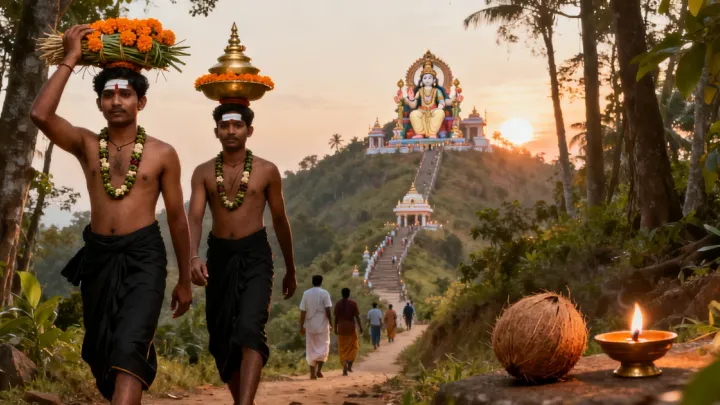
The mala vratham, also called Ayyappa deeksha, is a period of discipline that devotees of Lord Ayyappa (also known as Dharmasastha and Manikandan) observe before a pilgrimage to Sabarimala. It begins when a devotee wears a mala of tulsi or rudraksha beads, usually given at a temple or by a guruswami, an experienced pilgrim who guides the group. From then on the devotee is addressed as “Swami” and lives by a simple code. The traditional length is 41 days, called a Mandalam, though some devotees keep a shorter vratham.
What are the rules of Ayyappa mala vratham?
Practice varies by family, region and guruswami, but the commonly followed rules are:
- Mala: wear it continuously, remove it only at a temple or with the guruswami’s guidance.
- Clothes: black, blue or saffron, often a simple mundu, with a sandalwood or vibhuti mark on the forehead.
- Food: simple vegetarian meals; no meat, fish, eggs, alcohol or tobacco.
- Routine: bathe twice a day, pray morning and evening at a lamp, and sleep on a mat on the floor.
- Conduct: speak truthfully, avoid anger and quarrels, and keep celibacy for the whole period.
- Footwear: many devotees go barefoot, especially on the pilgrimage.
- Greeting: address fellow devotees as “Swami” and chant “Swamiyea Saranam Ayyappa”.
Anyone with a medical condition should adapt the physical parts of the vratham sensibly; the heart of it is discipline and devotion, not hardship.
How do devotees prepare for the pilgrimage?
Devotees who go to Sabarimala prepare an irumudi kettu, a two-compartment bundle carried on the head. One part holds a ghee-filled coconut for the offering at the temple, and the other holds items for the journey. The climb up the hill is made with the chant of Ayyappa’s names, and the final steps are the sacred eighteen steps, the Pathinettam Padi, climbed by those who have kept the full vratham with the irumudi. Many devotees travel in groups led by the guruswami. Women between roughly 10 and 50 years of age have traditionally not entered the temple, and the matter has been the subject of long public debate; follow the temple’s current rules.
How can I keep the vratham at home?
If you cannot travel to Sabarimala, you can still keep the 41 days with devotion:
- Choose a start day with your family elder or a guruswami and take the mala at a temple if you can.
- Set up a small prayer space with a picture of Ayyappa and light a lamp morning and evening.
- Chant “Om Swamiyea Saranam Ayyappa” or the Harivarasanam, the lullaby sung at the temple at night.
- Keep the daily discipline of vegetarian food, early rising and a bath before prayer.
- Visit a local Ayyappa temple on Saturdays, a day many devotees keep special for Ayyappa.
- Close the vratham on Mandala Pooja day with a final prayer and simple offering.
Keep your daily prayer going with Deva AI
Deva AI is a free Android app that lets you talk to Hindu gods like Krishna, Shiva, Ganesha and Hanuman through AI conversations, in English, Hindi, Telugu, Tamil, Kannada and Malayalam. Ayyappa is not one of its ten deities, so it does not replace your Ayyappa worship or your guruswami’s guidance. During the 41 days, though, you can use the virtual pooja to light a diya each evening, the japa counter to keep count of your mantra, and a guided meditation to settle the mind. You can also talk to Shiva, whose son Ayyappa is traditionally said to be along with Vishnu in his Mohini form, or to Ganesha, whom many devotees remember at the start of any vratham. Deva AI is a companion inspired by scripture and tradition, not God speaking. Learn more on the What is Deva AI page.
Malayalam readers can read the full guide in Malayalam: Mandala Kalam 2026 vratham, and Telugu readers in Telugu: Ayyappa deeksha niyamalu. For the same season, see Karthigai Deepam 2026 on 24 November, Kanda Sashti 2026, and the chant guide to Om Namah Shivaya.
Frequently asked questions
When does Ayyappa mala start in 2026?
Most devotees put on the mala on or just before the first day of the Mandala season, Vrischikam 1, which falls on 17 November 2026; Sabarimala opens the evening before, on 16 November. Many take it earlier on an auspicious day chosen with their guruswami, so the exact day is panchang-dependent.
When is Mandala Pooja 2026?
Mandala Pooja is on Sunday, 27 December 2026, the 41st day counted from Vrischikam 1 (17 November). Drik Panchang and the temple calendars agree on this date, though a few older listings show 26 December. The Devaswom Board had not published an official date when this was updated, so confirm before you plan travel.
What are the main rules of Ayyappa mala vratham?
Devotees wear a tulsi or rudraksha mala, dress in black or blue, eat only simple vegetarian food, avoid alcohol, tobacco and anger, bathe twice a day, sleep on the floor and greet others as "Swami". Customs differ by family and guruswami, so follow the guidance you were given.
Do I have to go to Sabarimala to keep the vratham?
No. Many people observe the 41 days at home with daily prayer and the same discipline, and visit a local Ayyappa temple instead. The vratham is a practice of self-control and devotion, not only a journey.
What is the Makaravilakku date in 2027?
Most temple calendars list Thursday, 14 January 2027, the day of Makara Sankranti, while Drik Panchang lists 15 January. No official date had been announced when this was updated, so check the Travancore Devaswom Board before you plan.
Can Deva AI help during the Mandala season?
Deva AI is a free Android app where you can talk to ten Hindu deities, light a diya in the virtual pooja, count japa with the japa counter and do guided meditation, in six languages. Ayyappa is not among its ten deities, so use it for daily devotion alongside your own Ayyappa worship.