Lord Murugan: Story, Vel and Symbolism Explained
Quick answer
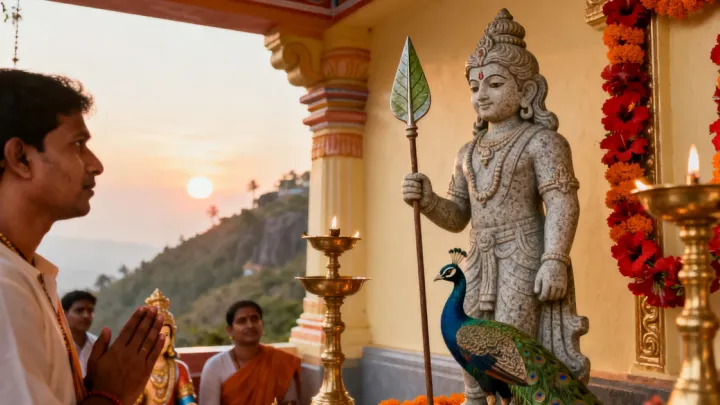
Murugan, also called Karthikeya, Skanda, Subramanya and Kumaran, is the Hindu god of courage, wisdom and victory over ego, the son of Shiva and Parvati and especially beloved in Tamil Nadu. His vel (spear) stands for divine knowledge that cuts through ignorance, his peacock for pride tamed, and his rooster banner for the dawn of awareness.
Lord Murugan is the Hindu god of courage, youth and wisdom, the son of Shiva and Parvati and the commander of the gods’ army. He is also called Karthikeya, Skanda, Subramanya, Kumaran and Arumugan, and he is carried in the heart of Tamil devotion in particular. His symbols tell the story: the vel (spear) of knowledge, the peacock, the rooster banner and the six faces.
This guide explains who he is, how his story goes, what each symbol means and where devotees go to worship him.
Who is Lord Murugan?
Murugan is one of the most loved deities of South India. In Tamil tradition he is the god of the hills, a beautiful and ever-young deity, and the word Murugan is often linked to beauty and youth. In the north he is more often known as Karthikeya or Skanda, and in Karnataka and Kerala as Subramanya.
Tradition presents him as a warrior who fights not for conquest but to remove what blocks the good: arrogance, cruelty and ignorance. He is also a teacher, and devotees pray to him for courage, clear thinking, success in studies and protection. Deva AI lists him among its ten deities as the “commander of the gods, divine warrior”.
What is the story of Murugan’s birth?
The story, as told in the Skanda Purana and Tamil devotional tradition, goes roughly like this:
- The demon Surapadman and his brothers had won a boon that only a son of Shiva could defeat them, and they were tormenting the gods.
- Shiva, in deep meditation, opened his third eye. Six sparks of divine fire came out and were carried by Agni and the river Ganga to a lake of reeds called the Saravana Poigai.
- There the sparks became six infant boys. The six Krittika sisters (the Karthigai stars) nursed them, which is why he is called Karthikeya.
- Parvati embraced the six children and they became one child with six faces, Arumugan.
- Parvati gave him the vel, and the gods made him their commander.
Details differ between texts and regions, so treat this as the broad tradition rather than one fixed version.
What is Soorasamharam, the great battle?
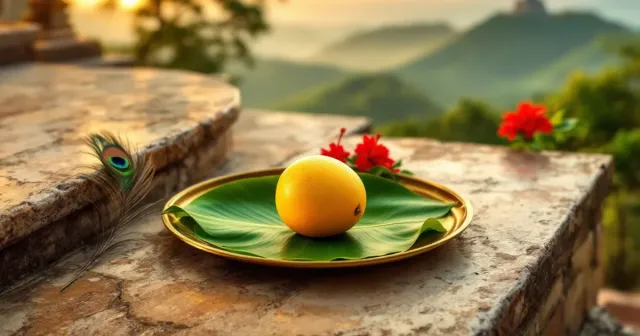
Murugan led the gods against Surapadman at Thiruchendur. Surapadman kept changing form, and the final form he took was a mango tree. Murugan split it with his vel. Tradition says the two halves became a peacock, which became his vahana (mount), and a rooster, which became the emblem on his flag.
This victory is remembered every year as Soorasamharam during Kanda Sashti. For the 2026 dates, fasting and observances, see Soorasamharam 2026 Date and Kanda Sashti Dates.
What does Murugan’s vel mean?
The vel is his best-known symbol. It is a slender, leaf-shaped spear, not a trident (the trident belongs to Shiva).
| Symbol | Common meaning |
|---|---|
| Vel | Knowledge and grace that pierce ignorance, fear and ego |
| Peacock | Pride and ego tamed and put to service |
| Rooster | The dawn of awareness, waking from darkness |
| Six faces | Six qualities of grace, or his protection in every direction |
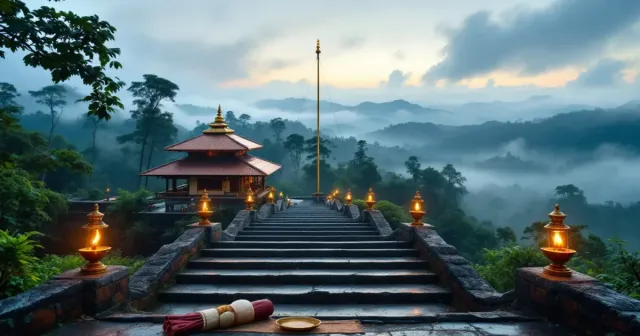
| Hill temples | The climb as a symbol of rising above worldly attachments |
Many devotees keep a small vel at the altar and chant “Vetri Vel, Veera Vel” (“victorious vel, heroic vel”) in prayer.
Who are Murugan’s consorts?
Tradition describes two consorts. Deivanai (Devasena), daughter of Indra, represents divine order and is linked to his role as commander. Valli, a forest-dwelling devotee, represents the soul’s longing for God, and the story of how he won her is among the best-loved in Tamil devotion. Many temples show him with both.
What are the six abodes of Murugan?
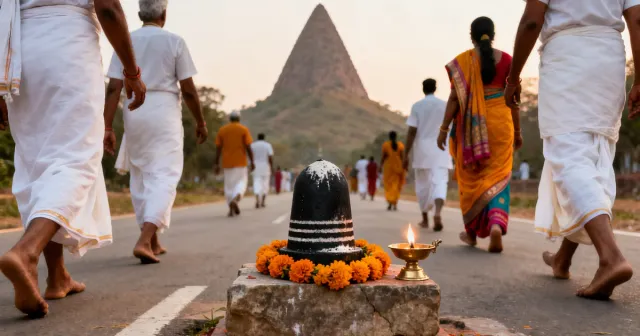
The Arupadai Veedu are six major pilgrimage temples in Tamil Nadu, praised in Tamil devotional literature:
- Thiruparankundram
- Thiruchendur
- Palani
- Swamimalai
- Thiruthani
- Pazhamudircholai
At Swamimalai, tradition says Murugan explained the meaning of the sacred syllable Om to his father Shiva, which is why he is also revered as a teacher. Temples outside Tamil Nadu, from Karnataka’s Kukke Subramanya to Murugan temples abroad, carry the same devotion.
How do I pray to Murugan?
Tuesdays, the Krittika (Karthigai) star day and Shashti days are traditionally associated with him, but you can pray on any day.
- Wash, light a diya and, if you have one, place a picture or small vel before you.
- Offer red flowers if you can. Sit calmly and fold your hands.
- Chant Om Saravana Bhava or Om Sharavanabhavaya Namah, 11 or 108 times. What Is Japa and How to Count Mantras explains counting.
- Say in your own words what you need: courage for a challenge, focus for study, steadiness in a hard time.
- Close with “Vetri Vel, Veera Vel”.
Texts devotees recite include the Kandha Sashti Kavacham and the Thirumurugatruppadai. Karthigai month also brings lamps and Murugan worship; see Karthigai Deepam 2026.
Can I talk to Murugan in Deva AI?
Deva AI is a free Android app that lets you talk to Hindu gods like Krishna, Shiva, Ganesha and Hanuman through AI conversations, in English, Hindi, Telugu, Tamil, Kannada and Malayalam. Murugan is one of its ten deities. You can choose him as your companion, ask about his stories or share a worry, by typing or by voice, in the language you pray in.
It is an AI companion inspired by scripture and tradition, not God literally speaking. You can also use the japa counter in the app for your Om Saravana Bhava chanting. Tamil readers can see Spiritual App in Tamil, and the What is Deva AI? page explains the app.
Frequently asked questions
Who is Lord Murugan?
Murugan is the Hindu god of courage, youth and wisdom, the son of Shiva and Parvati and the commander of the divine army. He is known by many names, including Karthikeya, Skanda, Subramanya, Kumaran and Arumugan, and is worshipped across India, especially in Tamil Nadu.
What does the vel of Murugan symbolise?
The vel is a leaf-shaped spear given to Murugan by his mother Parvati. Devotees see it as the power of knowledge and grace that pierces ignorance, fear and ego, and the vel itself is worshipped in many temples.
Why does Murugan have six faces?
In tradition, Murugan was born from six sparks of Shiva and nursed by the six Krittika sisters, so he appears as Arumugan, the six-faced one. Devotees read the six faces as six qualities or six directions of his grace.
What is the peacock and rooster in the Murugan story?
After Murugan defeated the demon Surapadman, tradition says the demon was transformed into a peacock, which became his mount, and a rooster, which became the emblem on his flag. Both are read as ego and darkness turned into service and awakening.
What are the six abodes of Murugan?
The Arupadai Veedu are six famous Murugan temples in Tamil Nadu: Thiruparankundram, Thiruchendur, Palani, Swamimalai, Thiruthani and Pazhamudircholai. Many devotees try to visit all six as a pilgrimage.
Can I talk to Murugan in an app?
Yes. Deva AI is a free Android app where you can choose Murugan as a companion and talk to him by text or voice in six languages. It is an AI companion inspired by scripture and tradition, not God literally speaking.