Tulsi Vivah 2026: Date (21 Nov), Muhurat & Puja Vidhi
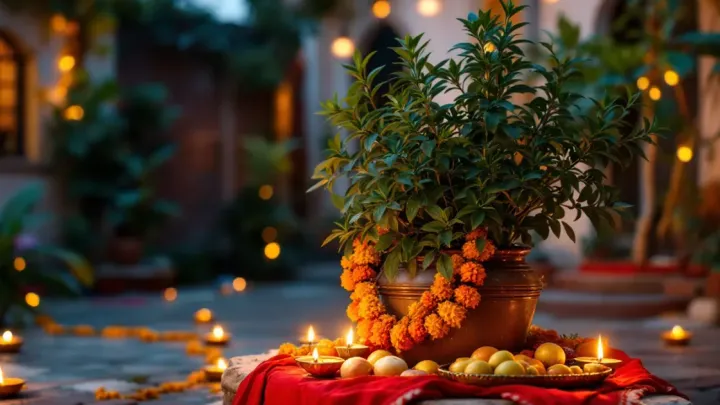
Quick answer
Tulsi Vivah 2026 falls on Saturday, 21 November, on Kartik Shukla Dwadashi, with the evening pradosh window from roughly 5:24 PM to 8:46 PM IST in many calendars. The festival is the ceremonial wedding of the tulsi plant to Vishnu in the form of Shaligram or Krishna, and it marks the start of the Hindu wedding season. Exact tithi and muhurat times vary by city and panchang, so confirm locally.
If you have a tulsi plant in your courtyard or on your balcony, one evening in November it gets dressed as a bride. When is Tulsi Vivah in 2026? Tulsi Vivah is on Saturday, 21 November 2026, the Dwadashi of the bright half of the month of Kartik, with the usual evening muhurat from about 5:24 PM to 8:46 PM IST in many calendars. Because tithi and sunset change from city to city, treat every time in this guide as panchang-dependent and check your local almanac.
Deva AI is a free Android app that lets you talk to Hindu gods like Krishna, Shiva, Ganesha and Hanuman through AI conversations, in English, Hindi, Telugu, Tamil, Kannada and Malayalam. You can read more on the About page, and later in this guide there is a way to use it on the day.
Tulsi Vivah 2026 date and muhurat
| Detail | 2026 |
|---|---|
| Dev Uthani (Prabodhini) Ekadashi | Friday, 20 November |
| Tulsi Vivah (Kartik Shukla Dwadashi) | Saturday, 21 November |
| Dwadashi tithi begins | about 6:30 to 7:00 AM on 21 November, depending on the panchang and city |
| Evening muhurat (pradosh) | about 5:24 PM to 8:46 PM IST in many calendars; New Delhi listings are shorter, around 5:25 PM to 7:49 PM |
| Kartik Purnima and Dev Deepawali | Tuesday, 24 November |
Published calendars differ by a few minutes to a few hours. The date itself, 21 November, is consistent across the sources we checked, but some families keep the ceremony on Ekadashi, 20 November, and some regions follow a different day in the Kartik fortnight. Follow your family priest or local temple where in doubt.
Is Tulsi Vivah done on Ekadashi or Dwadashi?
Both, depending on your family and region. In 2026 the two days fall back to back:
| Day | 2026 date | Tithi (New Delhi listings) |
|---|---|---|
| Dev Uthani (Prabodhini) Ekadashi | Friday, 20 November | Ekadashi from about 7:15 AM on 20 November to about 6:31 AM on 21 November |
| Kartik Shukla Dwadashi | Saturday, 21 November | Dwadashi begins about 6:30 to 7:00 AM on 21 November |
- Ekadashi (20 November): many families, especially in parts of north India, wake Vishnu on Dev Uthani Ekadashi and perform Tulsi Vivah the same evening.
- Dwadashi (21 November): many others, including large parts of Maharashtra and Gujarat, hold the wedding on Dwadashi evening, which is why most calendars list 21 November as the Tulsi Vivah date.
- Vaishnava calendars: some Vaishnava traditions observe the Ekadashi fast itself on 21 November in 2026, so temples following those calendars may schedule differently.
Neither day is wrong. Follow your family custom, or ask your local temple which day it follows.
Can Tulsi Vivah be done until Kartik Purnima?
Yes. Tulsi Vivah is traditionally allowed on any day from Dev Uthani Ekadashi to Kartik Purnima, so in 2026 the window runs from Friday, 20 November to Tuesday, 24 November. Families who cannot manage the ceremony on Ekadashi or Dwadashi, or who hold a larger community wedding, often choose a day within these five days. Many communities close the window on Kartik Purnima, which is also Dev Deepawali. If you read Hindi, our Dev Deepawali and Kartik Purnima 2026 guide covers that day’s snan, daan and deepdaan.
What is Tulsi Vivah?
Tulsi Vivah is a ritual wedding in which the tulsi (holy basil) plant is married to Vishnu, worshipped as a Shaligram stone or as Krishna. Tulsi is revered in Hindu homes as a form of Lakshmi, and the plant is watered, circled and offered a lamp every day. On this one day she is treated as a bride, decorated with a saree or red cloth, bangles and a bindi.
The festival comes right after Dev Uthani Ekadashi, when Vishnu is said to wake from his four-month sleep (Chaturmas). Tulsi Vivah is therefore also treated as the symbolic start of the wedding season, and many families begin fixing marriages after it.
What is the Tulsi Vivah samagri list?
Gather these the day before, since tulsi leaves are traditionally not plucked on Ekadashi and Dwadashi.
- A healthy tulsi plant in a pot or tulsi vrindavan
- A Shaligram stone, or a small Krishna or Vishnu idol or picture
- Four sugarcane stalks for the mandap, plus mango leaves
- A red chunri or small saree for Tulsi
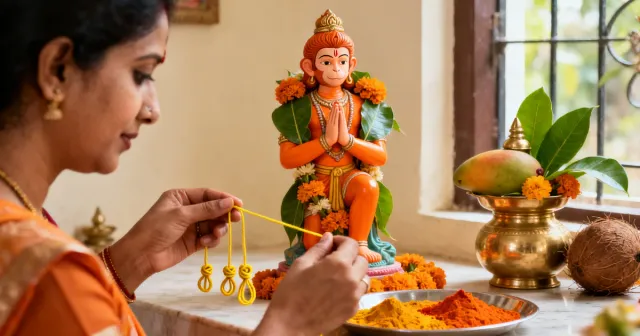
- Shringar items for Tulsi: bangles, bindi, sindoor, mehendi, a small mirror and comb
- A yellow cloth and a janeu (sacred thread) for the groom, if your family uses one
- Marigold flowers and garlands, and a thread or garland to tie the two together
- Turmeric, kumkum, akshata (rice with turmeric) and sandalwood paste
- Ghee diya, incense and camphor for aarti
- Seasonal fruit (amla, water chestnut, ber, sweet potato), sugarcane pieces and sweets for prasad
- A cloth (antarpat) to hold between bride and groom if you sing the mangalashtak
What is the story behind Tulsi Vivah?
The Puranic story tells of Vrinda, a devoted wife and a great devotee of Vishnu, married to the powerful asura Jalandhar. Her devotion and faithfulness protected him, and he grew too strong for the gods to defeat. Vishnu intervened to end that protection, and Jalandhar was defeated. In grief Vrinda is said to have cursed Vishnu to become a stone, which is why he is worshipped as the Shaligram, and she was later honoured as the tulsi plant. Versions of the tale vary by region and text.
The wedding of tulsi and Shaligram each year remembers this bond, and the lesson most families draw is one of devotion and reverence for the plant that is at the centre of the household.
How do I do Tulsi Vivah puja at home? (step by step)
Customs vary, but the following is a common home vidhi. Adjust to your family tradition.
- Clean the space. Wash the area around the tulsi, and draw a small rangoli. If the plant is in a vrindavan, paint it or decorate it with colour.
- Build a mandap. Many homes tie four sugarcane stalks around the plant to make a wedding canopy, and decorate it with marigold garlands and mango leaves.
- Dress Tulsi as the bride. Offer a red cloth or saree, bangles, a bindi, turmeric and kumkum.
- Place Vishnu. Keep a Shaligram stone, or a small Krishna or Vishnu murti or picture, next to the plant. Dress the idol with a yellow cloth and a garland.
- Light a lamp and incense. Light a ghee diya, and offer incense, flowers and fruit.
- Perform the wedding. If your family sings the mangalashtak, hold the antarpat cloth between Tulsi and the groom during the verses and shower akshata as it is removed. Then join the two with a thread or garland, chant the Vishnu mantras you know (such as “Om Namo Bhagavate Vasudevaya”), and walk around the plant. Many families do a symbolic kanyadaan and a short aarti.
- Offer prasad. Share sugarcane, fruit and sweets with the family and neighbours.
If you cannot do a full ceremony, a simple version is just as sincere: a lamp, a few tulsi leaves offered with the Vishnu mantra, and a circumambulation of the plant.
What should I avoid on Tulsi Vivah?
- Tulsi leaves are traditionally not plucked on Ekadashi and Dwadashi, so gather what you need the day before.
- Do not offer tulsi leaves to Shiva or Ganesha in many traditions, and follow your family’s custom.
- Keep the plant healthy and clean before the festival. If you do not have one, a clean tulsi leaf offering or a picture of Tulsi is acceptable in many homes.
How can Deva AI help on Tulsi Vivah?
If you are away from home or new to the festival, Deva AI can be a companion for the day. You can ask Vishnu or Krishna to explain the story of Vrinda and Shaligram in simple words, in your own language, light a virtual diya through the virtual pooja feature, and count a Vishnu mantra with the japa counter. It is an AI companion inspired by scripture and tradition, and it does not replace your family’s rituals or a priest’s guidance.
What comes after Tulsi Vivah?
Three days later come Kartik Purnima and Dev Deepawali, on Tuesday, 24 November, when lamps are lit in temples and on riverbanks. In the south, the same full moon is Karthigai Deepam, see Karthigai Deepam 2026, and in Telugu homes the sacred month is Karthika, see Karthika Masam 2026 (in Telugu).
Frequently asked questions
When is Tulsi Vivah in 2026?
Tulsi Vivah 2026 is on Saturday, 21 November, the Dwadashi of the bright half of Kartik. Dev Uthani Ekadashi falls the day before, on Friday, 20 November, and a few families hold the ceremony on that day itself, so follow your family or temple tradition.
What is the Tulsi Vivah muhurat in 2026?
Many calendars list the evening pradosh window on 21 November as about 5:24 PM to 8:46 PM IST, while city-specific timings such as New Delhi are shorter, around 5:25 PM to 7:49 PM. Dwadashi begins at about 6:30 to 7:00 AM on 21 November depending on the panchang, so check the timing for your own city.
Why is Tulsi Vivah celebrated?
It celebrates the marriage of Tulsi, revered as an embodiment of Lakshmi and linked to the devoted Vrinda in the Puranas, to Vishnu in the form of Shaligram. It is also seen as the symbolic end of the four-month Chaturmas period and the beginning of the wedding season.
What do I need for Tulsi Vivah puja at home?
You need a healthy tulsi plant in a pot or vrindavan, a Shaligram stone or a Krishna or Vishnu picture, a red cloth and bangles for Tulsi, marigold garlands, a lamp, incense, turmeric, kumkum, sugarcane and fruit. Many homes build a small mandap from sugarcane stalks around the plant.
Can Tulsi Vivah be done in the morning?
Yes. Many families do the puja in the morning on Dwadashi, while the wedding ceremony itself is traditionally held in the evening, after sunset. Either way, the day of Dwadashi is the key.
Can Tulsi Vivah be done without Shaligram?
Yes. Many families who do not have a Shaligram use a small idol or picture of Krishna or Vishnu as the groom. What matters is that the ceremony is done with devotion; follow your family priest if your tradition asks for a Shaligram.
What is the Tulsi Vivah mangalashtak?
Mangalashtak (mangal ashtak) are auspicious wedding verses sung just before the moment of marriage, especially in Maharashtrian and Gujarati homes. At Tulsi Vivah, family members hold a cloth (antarpat) between Tulsi and the groom while the verses are sung, then shower akshata (rice) as the cloth is removed.
Can unmarried girls do Tulsi Vivah?
Yes. In many families unmarried girls take part in or perform Tulsi Vivah, and it is traditionally associated with prayers for a good marriage. Couples without a daughter also often perform it as a kanyadaan. It is an act of devotion, not a guarantee of any result.
Can I take part in Tulsi Vivah using Deva AI?
Yes. Deva AI lets you ask Vishnu or Krishna about the story and meaning of the festival, light a virtual diya in its virtual pooja feature if you cannot be at home, and use the japa counter for a Vishnu mantra on the day.