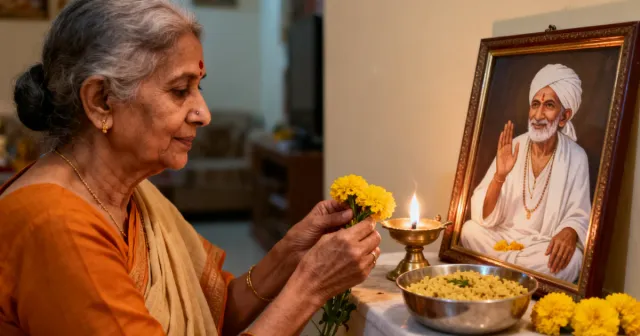
How to Do Ganesha Puja at Home: Simple Step-by-Step Guide
Quick answer
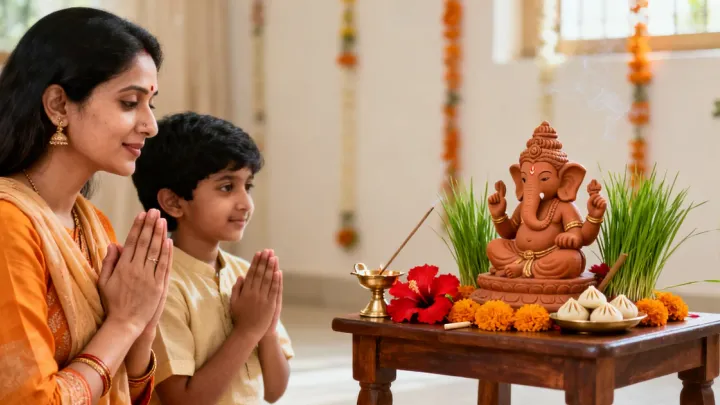
To do Ganesha puja at home, clean the space, place a Ganesha murti or picture on a clean seat, light a lamp, invoke him with a mantra, offer flowers, durva grass, incense and a sweet such as modak, then chant and end with aarti. A basic puja takes 15 to 30 minutes, and sincerity matters more than a long list of items. Deva AI is a free Android app where you can talk to a Ganesha companion and follow a virtual pooja.
Ganesha puja is the easiest ritual to begin at home. You do not need a priest, an elaborate setup or a long Sanskrit text. You need a clean space, a few simple offerings and a sincere mind.
How do you do Ganesha puja at home? Clean the place, set up a Ganesha murti or picture, light a lamp, invite him with a mantra, offer flowers, durva grass, incense and a sweet, chant his name, and finish with aarti. This guide walks through each step in order. Customs differ between families and regions, so treat it as a simple base you can adapt.
What do I need for Ganesha puja at home?
Gather these before you sit down:
| Item | Purpose |
|---|---|
| Ganesha murti or picture | The focus of the puja |
| Clean cloth or wooden seat | A respectful place to keep him |
| Diya with oil or ghee | The lamp, a symbol of light and knowledge |
| Incense sticks | Fragrance and a calm atmosphere |
| Flowers, red hibiscus if possible | Offered with devotion |
| Durva grass | A traditional offering to Ganesha |
| Modak, laddu or any sweet | Prasad, the offering you later share |
| Water in a small vessel | For cleansing and offering |
| Kumkum, turmeric, akshata (optional) | For tilak and offering |
If you do not have everything, do not postpone the puja. A single flower and a lamp, offered sincerely, is a complete offering in the tradition.
When is the best time for Ganesha puja?
Early morning, after a bath, is the traditional choice, but any quiet time works. Wednesdays and Chaturthi days (the fourth day of each lunar fortnight) are linked to Ganesha, and Ganesh Chaturthi is his main festival. Many families also do a short Ganesha puja before an exam, a journey, a new job or a housewarming. If you want to build a regular routine, see our guide to starting a daily prayer habit.
How do I do Ganesha puja step by step?
- Prepare yourself and the space. Bathe, wear clean clothes and tidy the spot where you will pray. Spread a clean cloth and place the murti or picture on it, ideally facing you.
- Light the lamp. Light the diya and the incense. Take a moment to settle your breath.
- Set your intention (sankalpa). Quietly say who you are praying for and why, for example for a clear mind before an exam, or simply thanks.
- Invoke Ganesha. Fold your hands and chant: Vakratunda Mahakaya, Surya Koti Samaprabha, Nirvighnam Kuru Me Deva, Sarva Karyeshu Sarvada. It means: O Lord with the curved trunk and mighty body, brilliant as a million suns, make all my work free of obstacles.
- Offer a seat and water. Many families sprinkle a little water near the murti with a spoon or leaf as a welcome and a symbolic wash.
- Apply tilak and offer flowers. Place a little kumkum or turmeric on the murti, then offer flowers. Red hibiscus is traditionally dear to Ganesha.
- Offer durva grass. Place a small bunch at his feet or on the murti. Twenty-one blades is a common custom.
- Offer sweets. Place modak, laddu or any sweet in front of him as naivedya, with a short prayer of gratitude.
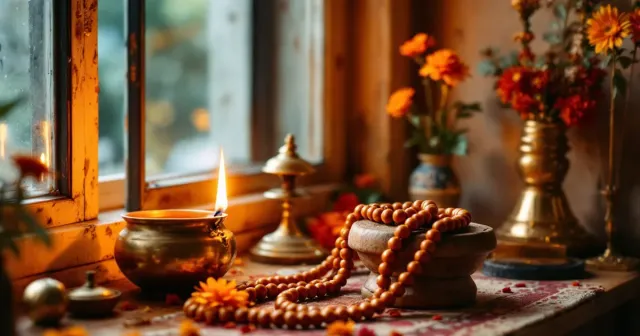
- Chant. Repeat Om Gam Ganapataye Namah 11, 21 or 108 times. You can count on a mala or a japa counter. Our post on the Ganesha mantra for success explains more mantras and their meaning.
- Do aarti. Wave the lit lamp in a clockwise circle before the murti while singing or reciting an aarti such as Jai Ganesh Deva.
- Close with thanks. Bow, ask for forgiveness for any mistake in the puja, and share the prasad with your family.
A full puja like this takes 15 to 30 minutes. A shorter version (lamp, flower, mantra, a minute of silence) takes five.
What mantra should I chant during Ganesha puja?
The simplest is Om Gam Ganapataye Namah. “Gam” is Ganesha’s seed sound (bija), and the mantra means salutations to the lord of the ganas. The Vakratunda verse above is widely used to begin a prayer. Choose one you can say clearly and with feeling, and repeat it calmly rather than rushing through many.
What are common mistakes to avoid?
- Worrying about perfection. Tradition values bhakti, devotion, above exact procedure. A small mistake does not spoil the puja.
- Skipping the lamp or the intention. These two give the puja its focus.
- Rushing the chant. Slow, steady repetition is better than speed.
- Using offerings you cannot share. Prasad is meant to be shared, so offer what the family will eat.
Families also follow rules of their own, such as which flowers to avoid or how to immerse a clay murti. If your family or community has a custom, follow it.
Can Deva AI help me with Ganesha puja at home?
Deva AI is a free Android app that lets you talk to Hindu gods like Krishna, Shiva, Ganesha and Hanuman through AI conversations, in English, Hindi, Telugu, Tamil, Kannada and Malayalam. If you are new to puja, you can ask a Ganesha companion in the app to explain a step, the meaning of a mantra or why an offering is made, in your own language. The app also has a virtual pooja for days when you cannot set up a full puja, and a japa counter for your mantra repetitions. It is inspired by scripture and tradition, and it is a companion for your practice rather than a replacement for a priest or elder. Learn more on the About page, or read why we pray to Ganesha first and try the virtual pooja when you are travelling.
Frequently asked questions
Answers to the most common questions are in the FAQ below. The core of the puja is simple: a clean space, a lamp, a flower, a mantra and a sincere heart.
Frequently asked questions
What do I need for Ganesha puja at home?
A Ganesha murti or picture, a clean cloth or seat, a lamp (diya) with oil or ghee, incense, flowers (red hibiscus is a favourite), durva grass, a sweet such as modak or laddu, water, and optionally kumkum, turmeric and akshata (unbroken rice). If you lack something, offer what you have with devotion.
Which day is best for Ganesha puja?
Wednesday and Chaturthi days are traditionally linked to Ganesha, and Ganesh Chaturthi is his biggest festival. You can also pray to him on any day, especially before starting something new.
Which mantra should I chant in Ganesha puja?
Om Gam Ganapataye Namah is the most common simple mantra. Many also begin with Vakratunda Mahakaya Surya Koti Samaprabha, Nirvighnam Kuru Me Deva Sarva Karyeshu Sarvada.
Can I do Ganesha puja without a priest?
Yes. A simple puja can be done by anyone at home. For a large occasion such as a housewarming or Ganesh Chaturthi installation, many families invite a priest, but a daily or occasional home puja does not require one.
Why is durva grass offered to Ganesha?
Durva (Bermuda grass) is a traditional offering to Ganesha, and Puranic stories link it to cooling him. It is usually offered in small bunches of 21 blades, though practices vary by family.
Can an app help me do puja at home?
It can support you. Deva AI is a free Android app with a virtual pooja, a japa counter and a Ganesha companion you can ask about the steps. It is inspired by scripture and tradition and does not replace a priest or teacher.