How to Start a Daily Prayer Habit: A 5-Minute Plan
Quick answer
The easiest way to start a daily prayer habit is to make it small and fixed: pray for just five minutes, at the same time and in the same spot every day, tied to something you already do such as brushing your teeth or lighting the lamp. Consistency matters more than length. Deva AI, a free Android app, can help with a japa counter, short guided practices and daily streaks.
Most people who want to pray daily do not fail for lack of faith. They fail because the plan was too big: an hour of puja, a long recitation, a perfect routine. By the third day life gets in the way, and the habit quietly ends.
How do you start a daily prayer habit? Start smaller than feels meaningful. Choose a fixed time, a fixed spot and a five-minute routine, and repeat it every day. Once it feels natural, grow it. This guide gives you that plan step by step.
Why does a small daily prayer work better than a long occasional one?
A habit forms through repetition, not intensity. Five minutes every day builds a rhythm that the mind begins to expect, while a long puja once a week stays an event. Many traditions also value regularity: the idea of nitya karma, daily duties done every day, treats prayer as part of the ordinary day, not something saved for festivals.
Starting small also removes the excuse of not having time. Almost everyone can find five minutes.
What is a simple 5-minute daily prayer routine?
Here is a routine a beginner can follow from tomorrow morning:
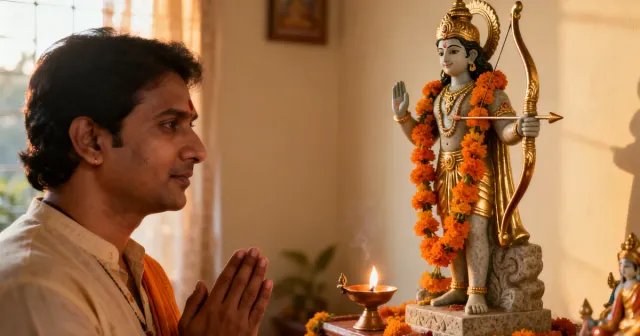
- Wash and sit (30 seconds). Wash your face and hands and sit on a mat or chair facing your shrine or a quiet wall.
- Light a lamp or incense (30 seconds). The small act of lighting a diya signals that prayer time has begun.
- Offer a short prayer (1 minute). Fold your hands and say a prayer you know, in any language. For a first habit, even “thank you for this day” is enough.
- Chant a mantra (2 minutes). Repeat a simple mantra such as Om Namah Shivaya or Om Gam Ganapataye Namah, 11 or 21 times. See Om Namah Shivaya: Meaning and Benefits or Ganesha Mantra for Success.
- Sit in silence (1 minute). Close your eyes and notice your breath.
- End with gratitude (30 seconds). Bow, and name one thing you are thankful for.
How do you choose the right time and place?
Pick a time you can keep, and tie it to something that already happens every day. This is called habit stacking: “after I brush my teeth, I light the lamp.”
| Time | Why people choose it | Watch out for |
|---|---|---|
| Early morning | Quiet house, fresh mind; many families pray at dawn | Hard if you wake late |
| Before leaving home | Easy to anchor to getting ready | Can feel rushed |
| Evening lamp time | Matches the traditional dusk prayer | Tiredness after work |
| Before sleep | Calming and works anywhere | Easy to fall asleep mid-prayer |
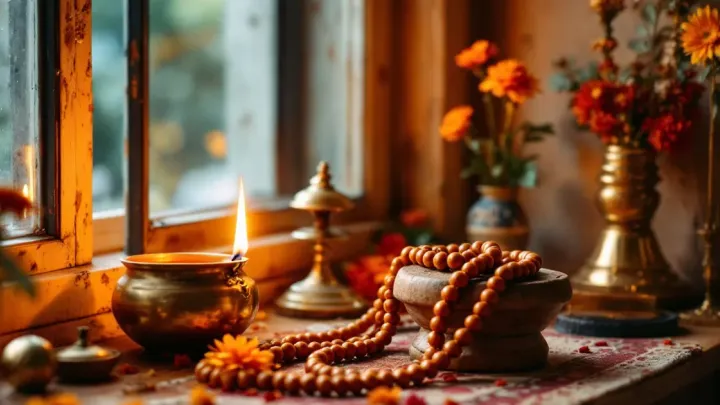
For the place, a clean corner is enough: a shelf, a small table or a windowsill with a picture or murti, a lamp and a few flowers. Keeping the same spot helps your mind switch into prayer faster. You do not need a temple room or an expensive setup.
What should you pray or chant when you are just beginning?
Choose one deity you feel close to and one short prayer, and keep it the same for a few weeks. Repetition builds depth. Good starting points:
- Ganesha, for a fresh start and removing obstacles.
- Hanuman, for courage and steady effort. You can read more in Who Is Hanuman?.
- Shiva, for calm and focus.
- Your family deity (kuladevata or ishta devata), whom your elders may already pray to.
If you do not know any prayers by heart yet, read one short verse each day from a book or app, then repeat it in your own words. If you are feeling lost or unsure what to say, How to Pray When You Feel Lost offers a gentle way to begin.
How do you stay consistent when motivation fades?
Motivation is high on day one and low on day ten. Plan for that:
- Make it tiny on bad days. Keep a “minimum prayer”: one mantra and folded hands. Doing the minimum keeps the chain alive.
- Track your streak. Marking each day on a calendar gives a small reward for showing up.
- Do not punish a missed day. Start again the next morning. Guilt is the biggest reason people abandon a habit.
- Pray with someone. A parent, spouse or friend who prays at the same time makes it easier to continue.
- Prepare the night before. Keep the lamp, matchbox and mala ready so there is nothing to look for.
How can you grow the habit after two weeks?
When five minutes feels easy, add one thing at a time: a longer japa of 108 repetitions on a mala, a few verses from the Bhagavad Gita or a Chalisa, or ten minutes of meditation. Add the next layer only after the previous one feels natural. Some devotees also add a short evening prayer, so the day is held between two small moments of devotion.
How can Deva AI support a daily prayer habit?
Deva AI is a free Android app that lets you talk to Hindu gods like Krishna, Shiva, Ganesha and Hanuman through AI conversations, in English, Hindi, Telugu, Tamil, Kannada and Malayalam. It also has features built around daily practice: a japa counter to count your mantras, virtual pooja where you can light a diya and ring the bell, guided meditation, a Bhagavad Gita reader, and karma points with daily streaks that reward showing up. You can also ask a deity for a short prayer or the meaning of a mantra in your own language.
Deva AI is a companion inspired by scripture and tradition. It can support your routine, but the habit itself, and the devotion behind it, are yours. For a comparison of tools, see Best Hindu Apps for Daily Prayer, and to learn more about the app, read What is Deva AI?.
Frequently asked questions
How do I start a daily prayer habit?
Start with five minutes at a fixed time and place. Light a lamp, say one short prayer or a mantra, sit quietly for a minute and end with thanks. Do it every day for two weeks before adding anything more.
What is the best time of day to pray?
Many families pray at dawn and at dusk, and the early morning hours before sunrise are traditionally considered especially peaceful. The best time is the one you can keep: a consistent time you can protect beats a perfect time you skip.
What if I miss a day of prayer?
Simply begin again the next day without guilt. A habit is built by returning, not by a perfect record. On a very busy day, a single mantra or a few folded-hand moments still counts.
Do I need a temple or a puja room at home?
No. A clean corner with a picture or murti of your chosen deity and a lamp is enough, and so is a quiet seat with no setup at all. What matters is sincerity and regularity.
Can an app help me pray every day?
It can help with reminders, counting and consistency. Deva AI is a free Android app with a japa counter, virtual pooja, guided meditation and daily streaks, but it supports your practice and does not replace your own devotion.