Lingashtakam Lyrics With Meaning: All 8 Verses in English
Quick answer
Lingashtakam is an eight-verse Sanskrit hymn to the Shiva Lingam, traditionally attributed to Adi Shankaracharya, that begins "Brahma Murari Surarchita Lingam". Every verse praises the Lingam for a quality or a story (burning Kama, humbling Ravana, ending Daksha's yajna) and ends "tat pranamami Sadashiva Lingam", "I bow to that Lingam of the eternal Shiva". It is usually chanted on Mondays, Pradosham and Maha Shivaratri, often during abhishekam.
Lingashtakam is one of the first Shiva hymns many people learn. Its rhythm is easy to follow, every verse ends with the same line, and it is sung in Shiva temples and homes on Mondays and Shivaratri. This page gives the full Lingashtakam lyrics in Sanskrit and in English letters, the meaning of each verse, the stories the verses point to, and simple guidance on how and when to chant it.
What is Lingashtakam? It is an eight-verse Sanskrit stotra (ashtakam means “a group of eight”) in praise of the Shiva Lingam, the aniconic form in which Shiva is worshipped. It is traditionally attributed to Adi Shankaracharya. Each verse ends with the refrain tat pranamami Sadashiva Lingam: “I bow to that Lingam of the eternal Shiva”. A ninth verse, the phala shruti, tells the fruit of reciting it.
What does the Lingam stand for?
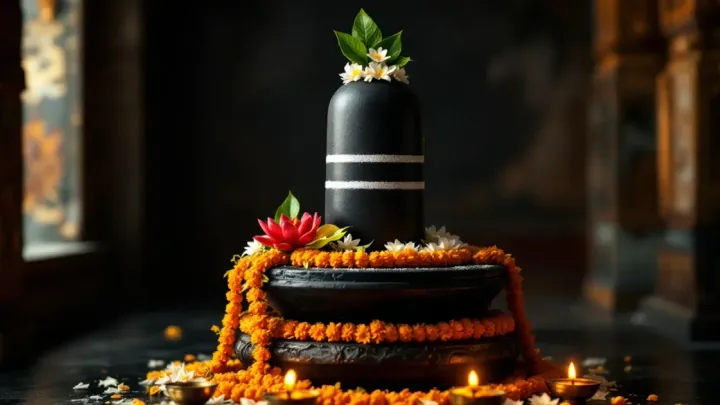
The word linga means “sign” or “mark”. The Shiva Lingam is a sign of the formless Shiva: a form without face or limbs that points to what has no form. In the Puranas, the Lingam appears as an endless pillar of fire whose top and bottom Brahma and Vishnu could not find, which is why the very first line of Lingashtakam says the Lingam is worshipped by Brahma and Vishnu. The same pillar of light is remembered at Tiruvannamalai on Karthigai Deepam.
Lingashtakam lyrics with meaning, verse by verse
The Sanskrit text below has been checked line by line against published editions. Printed versions differ in a few letters (for example kāmadahaṃ or kāmadahana in verse 2, sugandha or sugandhi in verse 3, vināśita or vināśana in verse 7); the meaning is the same.
Verse 1: Brahma Murari Surarchita Lingam
ब्रह्ममुरारिसुरार्चितलिङ्गं निर्मलभासितशोभितलिङ्गम् । जन्मजदुःखविनाशकलिङ्गं तत् प्रणमामि सदाशिवलिङ्गम् ॥१॥
Brahma-murāri-surārcita liṅgaṃ, nirmala-bhāsita-śobhita liṅgam, janmaja-duḥkha-vināśaka liṅgaṃ, tat praṇamāmi sadāśiva liṅgam.
Meaning: The Lingam worshipped by Brahma, by Vishnu (Murari) and by the gods; the Lingam that shines with a pure, spotless light; the Lingam that ends the sorrow born of birth. I bow to that Lingam of the eternal Shiva.
Verse 2: Devamuni Pravararchita Lingam
देवमुनिप्रवरार्चितलिङ्गं कामदहनकरुणाकरलिङ्गम् । रावणदर्पविनाशनलिङ्गं तत् प्रणमामि सदाशिवलिङ्गम् ॥२॥
Devamuni-pravarārcita liṅgaṃ, kāmadahana karuṇākara liṅgam, rāvaṇa-darpa-vināśana liṅgaṃ, tat praṇamāmi sadāśiva liṅgam.
Meaning: The Lingam worshipped by the best of gods and sages; the Lingam that burned Kama, the god of desire, and is a mine of compassion; the Lingam that crushed the pride of Ravana. I bow to that Lingam of the eternal Shiva.
Verse 3: Sarva Sugandha Sulepita Lingam
सर्वसुगन्धसुलेपितलिङ्गं बुद्धिविवर्धनकारणलिङ्गम् । सिद्धसुरासुरवन्दितलिङ्गं तत् प्रणमामि सदाशिवलिङ्गम् ॥३॥
Sarva-sugandha-sulepita liṅgaṃ, buddhi-vivardhana-kāraṇa liṅgam, siddha-surāsura-vandita liṅgaṃ, tat praṇamāmi sadāśiva liṅgam.
Meaning: The Lingam anointed with every fragrance; the Lingam that makes wisdom grow; the Lingam revered by siddhas, gods and asuras alike. I bow to that Lingam of the eternal Shiva.
Verse 4: Kanaka Mahamani Bhushita Lingam
कनकमहामणिभूषितलिङ्गं फणिपतिवेष्टितशोभितलिङ्गम् । दक्षसुयज्ञविनाशनलिङ्गं तत् प्रणमामि सदाशिवलिङ्गम् ॥४॥
Kanaka-mahāmaṇi-bhūṣita liṅgaṃ, phaṇipati-veṣṭita-śobhita liṅgam, dakṣa-suyajña-vināśana liṅgaṃ, tat praṇamāmi sadāśiva liṅgam.
Meaning: The Lingam adorned with gold and great jewels; the Lingam made beautiful by the king of serpents coiled around it; the Lingam that ended Daksha’s sacrifice. I bow to that Lingam of the eternal Shiva.
Verse 5: Kumkuma Chandana Lepita Lingam
कुङ्कुमचन्दनलेपितलिङ्गं पङ्कजहारसुशोभितलिङ्गम् । सञ्चितपापविनाशनलिङ्गं तत् प्रणमामि सदाशिवलिङ्गम् ॥५॥
Kuṅkuma-candana-lepita liṅgaṃ, paṅkaja-hāra-suśobhita liṅgam, sañcita-pāpa-vināśana liṅgaṃ, tat praṇamāmi sadāśiva liṅgam.
Meaning: The Lingam smeared with kumkum and sandalwood paste; the Lingam beautiful with garlands of lotuses; the Lingam that destroys sins gathered over time. I bow to that Lingam of the eternal Shiva.
Verse 6: Devaganarchita Sevita Lingam
देवगणार्चितसेवितलिङ्गं भावैर्भक्तिभिरेव च लिङ्गम् । दिनकरकोटिप्रभाकरलिङ्गं तत् प्रणमामि सदाशिवलिङ्गम् ॥६॥
Devagaṇārcita-sevita liṅgaṃ, bhāvair bhaktibhir eva ca liṅgam, dinakara-koṭi-prabhākara liṅgaṃ, tat praṇamāmi sadāśiva liṅgam.
Meaning: The Lingam worshipped and served by the hosts of gods, with true feeling and devotion; the Lingam that shines like ten million suns. I bow to that Lingam of the eternal Shiva.
Verse 7: Ashtadalopari Veshtita Lingam
अष्टदलोपरिवेष्टितलिङ्गं सर्वसमुद्भवकारणलिङ्गम् । अष्टदरिद्रविनाशनलिङ्गं तत् प्रणमामि सदाशिवलिङ्गम् ॥७॥
Aṣṭadalopari-veṣṭita liṅgaṃ, sarva-samudbhava-kāraṇa liṅgam, aṣṭa-daridra-vināśana liṅgaṃ, tat praṇamāmi sadāśiva liṅgam.
Meaning: The Lingam set upon and encircled by an eight-petalled lotus; the Lingam that is the cause of everything that comes into being; the Lingam that removes the eight kinds of poverty. I bow to that Lingam of the eternal Shiva.
Verse 8: Suraguru Suravara Pujita Lingam
सुरगुरुसुरवरपूजितलिङ्गं सुरवनपुष्पसदार्चितलिङ्गम् । परात्परं परमात्मकलिङ्गं तत् प्रणमामि सदाशिवलिङ्गम् ॥८॥
Suraguru-suravara-pūjita liṅgaṃ, suravana-puṣpa-sadārcita liṅgam, parātparaṃ paramātmaka liṅgaṃ, tat praṇamāmi sadāśiva liṅgam.
Meaning: The Lingam worshipped by Brihaspati, the teacher of the gods, and by the greatest of the gods; the Lingam always worshipped with flowers from the gardens of heaven; the Lingam that is higher than the highest, the Supreme Self itself. I bow to that Lingam of the eternal Shiva.
Phala shruti: the fruit of reciting
लिङ्गाष्टकमिदं पुण्यं यः पठेत् शिवसन्निधौ । शिवलोकमवाप्नोति शिवेन सह मोदते ॥
Liṅgāṣṭakam idaṃ puṇyaṃ yaḥ paṭhet śiva-sannidhau, śivalokam avāpnoti śivena saha modate.
Meaning: Whoever recites this sacred Lingashtakam in the presence of Shiva reaches the world of Shiva and rejoices with him.
What stories do the verses refer to?
Lingashtakam packs several Shiva stories into single words. Knowing them makes the chanting richer.
| Words in the hymn | Verse | The story |
|---|---|---|
| Brahma-murari-surarchita | 1 | Brahma and Vishnu searched for the ends of the pillar of fire and then worshipped it as the Lingam. |
| Kamadahana | 2 | When Kama shot his flower arrow to break Shiva’s meditation, Shiva burned him to ash with his third eye. |
| Ravana-darpa-vinashana | 2 | Ravana tried to lift Mount Kailash; Shiva pressed it down with a toe and humbled him, and Ravana became a devotee. |
| Phanipati-veshtita | 4 | The serpent king coiled around Shiva, one of his best-known ornaments. |
| Daksha-suyajna-vinashana | 4 | After Sati gave up her life at Daksha’s sacrifice, Shiva’s fierce form Virabhadra destroyed the yajna. |
| Dinakara-koti-prabhakara | 6 | The radiance of “ten million suns”, the light of the pillar of fire. |
How do you chant Lingashtakam?
- Choose a time. Early morning after a bath, or at dusk. Mondays (Somavar), Pradosham evenings and Maha Shivaratri are the traditional days.
- Sit before Shiva. A Lingam, a picture of Shiva or simply a lamp is enough. The phala shruti speaks of reciting “in Shiva’s presence”; a clean, quiet place where you worship counts.
- Light a lamp and offer what you have: water, milk, bilva (vilvam) leaves, white flowers, vibhuti. Verse 5 mentions kumkum, sandal and lotus garlands, but no offering is required.
- Chant all eight verses and the phala shruti once, slowly. Many people chant three or eleven rounds on special days.
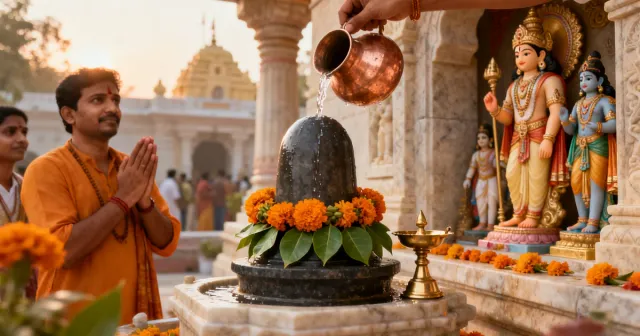
- During abhishekam, chant one verse with each pour of water or milk. Lingashtakam is one of the most common hymns sung during home abhishekam.
- End with a few minutes of silence or with Om Namah Shivaya on a mala.
If you are learning, listen to a recording a few times and follow the transliteration above. Clear, steady chanting with attention to the meaning matters more than speed.
When is the best time to chant it?
| Occasion | Why |
|---|---|
| Every Monday | Monday is Shiva’s day in most of India. |
| Pradosham (13th lunar day, at dusk) | The twice-monthly evening sacred to Shiva. |
| Karthika / Karthigai month | The month of lamps, especially Karthika Somavaram (Mondays). |
| Maha Shivaratri | The great night of Shiva; many chant it in each prahara of the night. |
| Arudra Darshan | Shiva as Nataraja in Margazhi; see Arudra Darshan. |
For the exact dates of Pradosham, Shivaratri and other Shiva days in the coming year, see the Hindu festival calendar.
What are the benefits of Lingashtakam?
The hymn names its own blessings: the end of the sorrow of birth (verse 1), growth of wisdom (verse 3), the destruction of accumulated sins (verse 5), the removal of the eight kinds of poverty (verse 7), and, in the closing verse, reaching Shiva’s world and rejoicing with him. Devotees also find that the steady refrain calms the mind and turns attention to Shiva.
These are words of faith from the tradition, not guaranteed results. The real fruit is the habit of bowing, eight times over, to something greater than yourself.
If you want a mantra specifically for healing and protection, the Mahamrityunjaya Mantra is the one traditionally chanted for that.
How is Lingashtakam different from other Shiva stotras?
| Hymn | Length | Focus |
|---|---|---|
| Lingashtakam | 8 verses + 1 | Praise of the Shiva Lingam, with a refrain; easy for beginners |
| Shiva Panchakshara Stotram | 5 verses + 1 | One verse for each syllable of Na-Ma-Shi-Va-Ya |
| Bilvashtakam | About 8 verses | Offering bilva leaves to Shiva |
| Shiva Tandava Stotram | About 15 verses | Shiva’s cosmic dance; attributed to Ravana, fast and demanding |
| Shri Rudram | Long Vedic hymn | From the Yajurveda, chanted in temple abhishekam |
Ask Shiva about Lingashtakam in Deva AI
If a line puzzles you, or you want to hear the story of Kama or Ravana again, you can ask. Deva AI is a free Android app that lets you talk to Hindu gods like Krishna, Shiva, Ganesha and Hanuman through AI conversations, in English, Hindi, Telugu, Tamil, Kannada and Malayalam. You can ask the Shiva companion what tat pranamami Sadashiva Lingam means, or how to begin a Monday practice, by text or voice. Deva AI also has a japa counter if you want to count rounds of Om Namah Shivaya after the hymn.
The Shiva in Deva AI is an AI companion inspired by scripture and tradition, not Shiva himself, and it does not replace a guru or a temple priest. To learn more about the app, read What is Deva AI?, or see how others use it in Talk to Shiva.
Frequently asked questions
What is the meaning of Lingashtakam?
Lingashtakam means "eight verses on the Lingam". Each verse describes the Shiva Lingam (worshipped by Brahma and Vishnu, radiant as countless suns, the cause of all creation) and ends with "I bow to that Lingam of the eternal Shiva".
Who wrote Lingashtakam?
It is traditionally attributed to Adi Shankaracharya, the 8th-century teacher, as are many popular stotras. There is no firm historical evidence for the attribution, so many scholars simply call it a traditional hymn.
What does "Brahma Murari Surarchita Lingam" mean?
It means "the Lingam worshipped by Brahma, by Murari (Vishnu, the enemy of the demon Mura) and by the gods". It is the opening line of the first verse.
When should I chant Lingashtakam?
Any time you worship Shiva. Devotees especially chant it on Mondays, on Pradosham evenings, on Maha Shivaratri, in the month of Karthikai (Karthika) and during abhishekam of a Shiva Lingam at home or in a temple.
What are the benefits of chanting Lingashtakam?
Its closing verse says that whoever recites it near Shiva reaches Shiva's world and rejoices with him. The verses also name the removal of accumulated sins and of sorrow, and the growth of wisdom. These are the hymn's own words of faith, not promises of a particular outcome.
Can women and beginners chant Lingashtakam?
Yes. Lingashtakam is a simple devotional stotra sung by people of every age and background, at home and in temples. It needs no initiation; sincerity matters more than perfect pronunciation.