Sai Baba Teachings: Shraddha and Saburi Explained
Quick answer
Shirdi Sai Baba's central teaching is shraddha (faith) and saburi (patience): trust in the divine and wait with steadiness. He also taught that God is one (Sabka Malik Ek, "one God is the master of all"), that service and charity matter more than ritual, and that a devotee should surrender and not worry. You can reflect on these teachings in Deva AI, a free Android app with a Sai Baba companion.
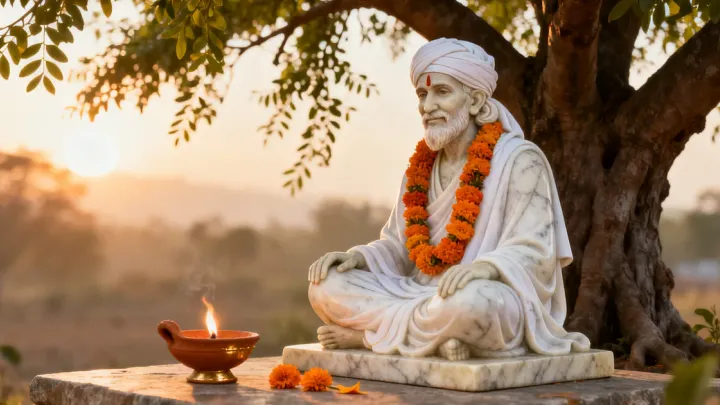
Sai Baba of Shirdi lived most of his life in a small village in Maharashtra, in a mosque he called Dwarkamai, with almost nothing of his own. Yet his words reach devotees across religions and languages more than a century after his passing in 1918. If you want to know what he stood for, it comes down to a few simple ideas.
What are the main teachings of Sai Baba? His central teaching is shraddha and saburi: faith and patience. Around it sit the oneness of God, love and service to every living being, charity, forgiveness and surrender to the divine will.
What do shraddha and saburi mean?
| Word | Meaning | In daily life |
|---|---|---|
| Shraddha | Faith, steady trust in God and the guru | Keep praying even when you do not see results |
| Saburi | Patience, endurance with hope | Wait without panic, and do not rush or blame |
The two go together. Faith without patience gives up when answers are slow, and patience without faith becomes mere waiting. Devotees often describe them as the two coins Sai Baba asked of anyone who came to him, a way of saying that a devotee needs inner steadiness, not money.
What does Sabka Malik Ek mean?
Sabka Malik Ek means “one God is the master of all”. It is the saying most closely linked with Sai Baba, who lived between a mosque and a temple tradition and was loved by Hindus and Muslims alike. The phrase is popular and widely attributed to him, rather than a line from a particular scripture, so treat it as a devotional summary of his outlook: the divine is one, and the paths to it are many.
What other teachings are remembered?
These come from the Sai Satcharitra and from the way devotees have passed down his life:
- Serve and feed others. He is remembered for sharing food and treating the hungry as guests.
- Give without show. Charity and dakshina were about letting go of attachment, not a payment.
- Forgive and do not harbour anger. He asked devotees to let go of hatred and quarrels.
- Surrender your worry. A line often quoted by devotees is “Why fear when I am here”, a reassurance to those who trust. It is an attributed saying, so its exact wording varies between sources.
- Keep the guru in mind. Remember and be grateful to the one who guides you.
- Live simply. He owned a few cooking pots, a kafni and a stone seat.
Where do these teachings come from?
The main source is the Sai Satcharitra, a Marathi work by Govind Raghunath Dabholkar, called Hemadpant, a devotee who recorded stories and sayings of Sai Baba. Devotees read it in weekly or seven-day parayanas. Reading the original text, or a trusted translation, is the best way to go deeper than any summary, including this one.
How can I live shraddha and saburi every day?
- Pick a fixed time to pray, even two minutes, and keep it through dull weeks.
- Name one worry each morning and consciously hand it over before you start your work.
- Pause before reacting. When something goes wrong, wait one breath before you answer.
- Do one small act of service, such as feeding a stray animal, paying a bill for someone, or helping an elder.
- Keep a Thursday ritual if it suits you: a lamp, a few flowers and a quiet reading from the Sai Satcharitra.
- Review in the evening. Ask where you were patient and where you were not.
The practice is not about perfection. Even devotees describe it as slow work, which is exactly why patience is part of it.
Can I ask Sai Baba about these teachings in Deva AI?
Deva AI is a free Android app that lets you talk to Hindu gods like Krishna, Shiva, Ganesha and Hanuman through AI conversations, in English, Hindi, Telugu, Tamil, Kannada and Malayalam. Sai Baba is one of its ten deity companions, so you can bring a worry or a question and reflect on it in the spirit of his teachings. The companion is inspired by tradition and scripture; it is not Sai Baba literally speaking, and it does not replace a teacher or a text like the Sai Satcharitra. For the bigger picture, see our guide to the app to talk to God and our answer on whether it is okay to chat with God using AI.
In the app you can also:
- Talk by text or voice in your own language.
- Do a virtual pooja with a lamp and flowers, as in our virtual pooja guide.
- Build a daily streak and earn karma points for regular practice.
Deva AI is free to download and use on Android, with a free daily message quota. An iOS version is coming soon. Read more about what Deva AI is.
The bottom line
Sai Baba’s message fits in two words: trust and wait. Shraddha keeps you going and saburi keeps you steady, while service to others keeps your faith from being only about yourself. Start with one small practice this week and let it grow.
Frequently asked questions
What are the main teachings of Sai Baba?
The main teachings are shraddha (faith) and saburi (patience), the oneness of God, love and service to all beings, charity, forgiveness and surrender to the divine will. Devotees remember him for simple living and for treating people of every religion alike.
What does shraddha and saburi mean?
Shraddha means faith, a steady trust in God and the guru. Saburi means patience, the ability to wait and endure without losing hope. Sai Baba is traditionally said to have asked devotees to hold both together.
What does Sabka Malik Ek mean?
"Sabka Malik Ek" means "one God is the master of all". It is widely attributed to Sai Baba and is understood as a call to see all religions and all people as under one divine source. Its exact wording is a popular saying, not a verse from a scripture.
Where can I read about Sai Baba's life and teachings?
The best-known text is the Sai Satcharitra, written in Marathi by Govind Raghunath Dabholkar, known as Hemadpant, who was a devotee. It collects stories and sayings from Sai Baba's life in Shirdi, Maharashtra.
Why is Thursday special for Sai Baba?
Many devotees worship Sai Baba on Thursdays, visit Sai temples, and offer flowers or a lamp. It is a devotional custom, not a rule, and you can pray to him on any day.
Can I ask questions about Sai Baba's teachings in an app?
Yes. Deva AI is a free Android app with a Sai Baba companion you can talk to by text or voice. It is inspired by tradition and the teachings devotees share, and does not replace a teacher or the Sai Satcharitra.