Kalabhairava Jayanti 2026: 1 December, Ashtami Timings, Ashtakam
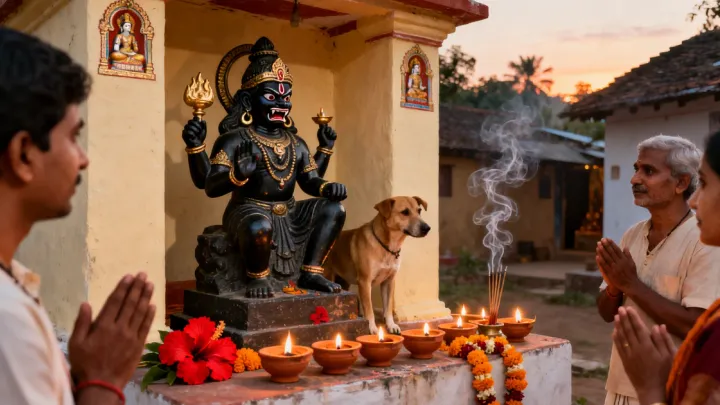
Quick answer
Kalabhairava Jayanti 2026 is on Tuesday, 1 December in India, the Krishna Ashtami of Margashirsha (Kartika in the Amanta calendar). Ashtami tithi runs from 12:11 AM to 11:13 PM IST on 1 December (Drik Panchang). Calendars for the USA and UK list 30 November, because there the tithi falls on the night of the 30th. Devotees fast, worship Kalabhairava at night with a lamp, black sesame and the mantra Om Kalabhairavaya Namah, and feed dogs. Deva AI is a free Android app where you can ask a Shiva companion about the festival.
Kalabhairava Jayanti 2026 falls on Tuesday, 1 December 2026 in India. It is the Krishna Ashtami of Margashirsha, the day devotees honour Kalabhairava, the fierce guardian form of Shiva. Some panchangs list 30 November, so see the section below on why the date differs and check the one your family follows.
What is the date of Kalabhairava Jayanti 2026?
| Detail | 2026 |
|---|---|
| Festival | Kalabhairava Jayanti (Kalabhairav Ashtami) |
| Date in India | Tuesday, 1 December |
| Date in UK/US calendars | Monday, 30 November |
| Tithi | Krishna Ashtami of Margashirsha (Kartika in Amanta calendars such as Telugu, Kannada and Marathi) |
| Ashtami tithi begins | 12:11 AM, Tuesday 1 December (IST) |
| Ashtami tithi ends | 11:13 PM, Tuesday 1 December (IST) |
| Best time to worship | Evening and night of 1 December, after sunset and before 11:13 PM |
Ashtami timings and sunset by city
A tithi begins and ends at the same instant everywhere, so the IST times are the same across India. Sunset, and with it the evening worship, changes by city.
| City | Ashtami (IST) | Sunrise, 1 Dec | Sunset, 1 Dec | Rahu Kalam, 1 Dec |
|---|---|---|---|---|
| New Delhi | 12:11 AM to 11:13 PM, 1 Dec | 6:56 AM | 5:24 PM | 2:47 PM to 4:05 PM |
| Chennai | 12:11 AM to 11:13 PM, 1 Dec | 6:15 AM | 5:40 PM | 2:49 PM to 4:15 PM |
Source: Drik Panchang day panchang for New Delhi and Chennai. If you want your night puja to fall within Ashtami, finish it before 11:13 PM IST. Your family priest or temple may follow its own panchang; follow that.
Why do some sources say 30 November and others 1 December?
In India, Ashtami begins at 12:11 AM on Tuesday 1 December, a few minutes after midnight, and ends at 11:13 PM the same night. That makes the whole of 1 December, sunrise, evening and most of the night, Ashtami, so 1 December is Kalabhairava Jayanti in India. If you read “Ashtami begins on 30 November” somewhere, that is the night of 30 November going into 1 December, not the evening of the 30th.
Outside India the same instant falls earlier on the clock:
| Place | Ashtami begins (local) | Ashtami ends (local) | Observed on |
|---|---|---|---|
| India (IST) | 12:11 AM, 1 Dec | 11:13 PM, 1 Dec | Tuesday, 1 December |
| UK (GMT) | 6:41 PM, 30 Nov | 5:43 PM, 1 Dec | Monday, 30 November |
| US East (EST) | 1:41 PM, 30 Nov | 12:43 PM, 1 Dec | Monday, 30 November |
| US West (PST) | 10:41 AM, 30 Nov | 9:43 AM, 1 Dec | Monday, 30 November |
In the UK and USA Ashtami covers the night of 30 November, and Bhairava is worshipped at night, which is why calendars there give 30 November. Times abroad are converted from the IST times above.
If your family has its own tradition or a priest you consult, follow that. The panchang is the final word, not any website, including this one.
Who is Kalabhairava and why is he worshipped?
Kalabhairava (“Kala” means time, “Bhairava” is the fearsome one) is a form of Shiva who rules over time, fear and protection. The best-known story, from the Puranas, says that Brahma grew proud of his five heads. Shiva manifested Bhairava, who removed Brahma’s fifth head. The skull stuck to his hand until he reached Kashi, where he was freed. For that reason Kalabhairava is regarded as the kotwal, the guardian, of Kashi (Varanasi), and Bhairava shrines stand in many temple towns across India.
Devotees turn to him for protection from fear, for clearing obstacles and for relief from the sense of being trapped by time. His dog is his vahana, and his fierce look is understood as ferocity against ego and wrong-doing, not against the devotee.
Deva AI is a free Android app that lets you talk to Hindu gods like Krishna, Shiva, Ganesha and Hanuman through AI conversations, in English, Hindi, Telugu, Tamil, Kannada and Malayalam. If you want to understand Bhairava’s place in Shiva worship, you can ask the Shiva companion in the app; it is a companion inspired by scripture and tradition, not a priest.
What is the Kalabhairava Jayanti puja vidhi?
Customs differ by region and family. This is a common home observance:
- Fast. Many devotees fast through the day, taking only fruit and milk, or keep a simple one-meal fast if health requires it.
- Bathe and prepare. Take a bath in the evening, wear clean clothes and set up an image or murti of Kalabhairava, or Shiva if you have none.
- Light a lamp. A mustard oil or sesame oil lamp is traditional for Bhairava.
- Make offerings. Flowers (red flowers such as hibiscus are common), black sesame, incense and a simple naivedya. Urad dal vada or jaggery sweets are offered in many places.
- Chant. Recite Om Kalabhairavaya Namah 108 times, then the Kalabhairava Ashtakam if you know it.
- Close with arati and ask for protection and courage.
- Feed dogs. Serving a dog with milk or roti is considered serving Bhairava.
If you cannot manage the full steps, a lamp, the mantra and a sincere prayer are enough.
Which mantra should I chant for Kalabhairava?
| Mantra | Use |
|---|---|
| Om Kalabhairavaya Namah | Short mantra for 108 repetitions |
| Kalabhairava Ashtakam | Eight-verse hymn attributed to Adi Shankaracharya, begins “Deva-raja-sevyamana-pavanangri-pankajam”; full text and meaning below |
Pronounce slowly and chant with attention rather than speed. You can count repetitions with the japa counter in Deva AI. If chanting is new to you, the guide to Om Namah Shivaya and its meaning is a gentle place to start.
Kalabhairava Ashtakam: full text with meaning
The Kalabhairava Ashtakam is the hymn most chanted on Kalabhairava Jayanti and on every Kalashtami. Tradition attributes it to Adi Shankaracharya. It has eight verses (ashtakam means “a group of eight”), each ending with kāśikā purādhinātha kālabhairavaṃ bhaje, “I worship Kalabhairava, lord of the city of Kashi”, and a closing verse on the benefit of reciting it. The text below follows the version published on shlokam.org, checked verse by verse against the Sanskrit Wikisource text; the meanings are short summaries.
Verse 1
देवराजसेव्यमानपावनांघ्रिपङ्कजं व्यालयज्ञसूत्रमिन्दुशेखरं कृपाकरम् ।
नारदादियोगिवृन्दवन्दितं दिगंबरं काशिकापुराधिनाथकालभैरवं भजे ॥१॥
deva rāja sevyamāna pāvanāṅghri paṅkajaṃ vyāla yajña sūtramindu śekharaṃ kṛpākaram
nāradādi yogi vṛnda vanditaṃ digambaraṃ kāśikā purādhinātha kālabhairavaṃ bhaje
Indra, king of the gods, serves his pure lotus feet; a serpent is his sacred thread and the moon is on his head. Full of compassion, sky-clad, praised by Narada and the yogis: I worship Kalabhairava, lord of Kashi.
Verse 2
भानुकोटिभास्वरं भवाब्धितारकं परं नीलकण्ठमीप्सितार्थदायकं त्रिलोचनम् ।
कालकालमंबुजाक्षमक्षशूलमक्षरं काशिकापुराधिनाथकालभैरवं भजे ॥२॥
bhānu koṭi bhāsvaraṃ bhavābdhitārakaṃ paraṃ nīla kaṇṭhamīpsitārtha dāyakaṃ trilocanam
kālakālamambujākṣamakṣaśūlamakṣaraṃ kāśikā purādhinātha kālabhairavaṃ bhaje
He shines like ten million suns, carries us across the ocean of worldly life and is the Supreme. Blue-throated, three-eyed, granter of what we wish for, death even to Death, lotus-eyed, holding the trident, imperishable: I worship Kalabhairava, lord of Kashi.
Verse 3
शूलटङ्कपाशदण्डपाणिमादिकारणं श्यामकायमादिदेवमक्षरं निरामयम् ।
भीमविक्रमं प्रभुं विचित्रताण्डवप्रियं काशिकापुराधिनाथकालभैरवं भजे ॥३॥
śūla ṭaṅka pāśa daṇḍa pāṇimādi kāraṇaṃ śyāma kāyamādi devamakṣaraṃ nirāmayam
bhīmavikramaṃ prabhuṃ vicitra tāṇḍava priyaṃ kāśikā purādhinātha kālabhairavaṃ bhaje
He holds the trident, axe, noose and staff, and is the first cause of all. Dark-bodied, the first god, imperishable and free of all ills, of terrible valour, the Lord who loves the wondrous tandava dance: I worship Kalabhairava, lord of Kashi.
Verse 4
भुक्तिमुक्तिदायकं प्रशस्तचारुविग्रहं भक्तवत्सलं स्थितं समस्तलोकविग्रहम् ।
विनिक्वणन्मनोज्ञहेमकिङ्किणीलसत्कटिं काशिकापुराधिनाथकालभैरवं भजे ॥४॥
bhukti mukti dāyakaṃ praśasta cāru vigrahaṃ bhakta vatsalaṃ sthitaṃ samasta loka vigraham
vi nikvaṇanmanojña hemakiṅkiṇī lasatkaṭiṃ kāśikā purādhinātha kālabhairavaṃ bhaje
He gives both worldly enjoyment and liberation, has a beautiful, praised form, loves his devotees and holds all the worlds within him. A girdle of golden bells rings sweetly at his waist: I worship Kalabhairava, lord of Kashi.
Verse 5
धर्मसेतुपालकं त्वधर्ममार्गनाशकं कर्मपाशमोचकं सुशर्मदायकं विभुम् ।
स्वर्णवर्णशेषपाशशोभिताङ्गमण्डलं काशिकापुराधिनाथकालभैरवं भजे ॥५॥
dharma setu pālakaṃ tvadharma mārga nāśakaṃ karma pāśa mocakaṃ su śarma dāyakaṃ vibhum
svarṇa varṇa śeṣa pāśa śobhitāṅga maṇḍalaṃ kāśikā purādhinātha kālabhairavaṃ bhaje
He guards the bridge of dharma, destroys the paths of adharma, frees us from the bonds of karma and gives true happiness. The all-pervading Lord whose body shines with a golden serpent: I worship Kalabhairava, lord of Kashi.
Verse 6
रत्नपादुकाप्रभाभिरामपादयुग्मकं नित्यमद्वितीयमिष्टदैवतं निरंजनम् ।
मृत्युदर्पनाशनं करालदंष्ट्रमोक्षणं काशिकापुराधिनाथकालभैरवं भजे ॥६॥
ratna pādukā prabhābhi rāma pāda yugmakaṃ nityamadvitīyamiṣṭa daivataṃ nirañjanam
mṛtyu darpa nāśanaṃ karāla daṃṣṭra mokṣaṇaṃ kāśikā purādhinātha kālabhairavaṃ bhaje
His feet glow with jewelled sandals. Eternal, without a second, the beloved deity, spotless; he crushes the pride of Death and his fearsome fangs bring release: I worship Kalabhairava, lord of Kashi.
Verse 7
अट्टहासभिन्नपद्मजाण्डकोशसंततिं दृष्टिपातनष्टपापजालमुग्रशासनम् ।
अष्टसिद्धिदायकं कपालमालिकाधरं काशिकापुराधिनाथकालभैरवं भजे ॥७॥
aṭṭa hāsa bhinna padmajāṇḍa kośa santatiṃ dṛṣṭi pāta naṣṭa pāpajālamugra śāsanam
aṣṭa siddhi dāyakaṃ kapāla mālikā dharaṃ kāśikā purādhinātha kālabhairavaṃ bhaje
His great laugh shatters the shells of the cosmic eggs born of Brahma; his glance destroys the web of sin; his rule is stern. Giver of the eight siddhis, wearing a garland of skulls: I worship Kalabhairava, lord of Kashi.
Verse 8
भूतसंघनायकं विशालकीर्तिदायकं काशिवासलोकपुण्यपापशोधकं विभुम् ।
नीतिमार्गकोविदं पुरातनं जगत्पतिं काशिकापुराधिनाथकालभैरवं भजे ॥८॥
bhūta saṅgha nāyakaṃ viśāla kīrti dāyakaṃ kāśi vāsa loka puṇya pāpa śodhakaṃ vibhum
nīti mārga kovidaṃ purātanaṃ jagatpatiṃ kāśikā purādhinātha kālabhairavaṃ bhaje
Leader of the hosts of beings, giver of wide fame, the Lord who cleanses the merit and sin of those who live in Kashi; master of the path of right conduct, ancient, lord of the universe: I worship Kalabhairava, lord of Kashi.
Phala shruti (closing verse)
कालभैरवाष्टकं पठंति ये मनोहरं ज्ञानमुक्तिसाधनं विचित्रपुण्यवर्धनम् ।
शोकमोहदैन्यलोभकोपतापनाशनं ते प्रयान्ति कालभैरवांघ्रिसन्निधिं ध्रुवम् ॥९॥
kālabhairavāṣṭakaṃ paṭhanti ye manoharaṃ jñāna mukti sādhanaṃ vicitra puṇya vardhanam
śoka moha dainya lobha kopa tāpa nāśanaṃ te prayānti kālabhairavāṅghri sannidhiṃ dhruvam
Those who recite this lovely Kalabhairava Ashtakam, a means to knowledge and liberation that increases merit and removes grief, delusion, poverty, greed, anger and suffering, surely reach the feet of Kalabhairava.
Chant it slowly, once or three times, after lighting the lamp. If Sanskrit is new to you, read the transliteration aloud a few times before the festival night.
Kalashtami dates from December 2026 to December 2027
Kalashtami (Masik Kalashtami) is the Krishna Ashtami of every lunar month, kept for Kalabhairava with a lamp, the mantra and often a fast. The day listed is the one Drik Panchang gives for New Delhi; times are IST.
| Date | Month (Purnimanta) | Ashtami begins | Ashtami ends |
|---|---|---|---|
| Tue, 1 Dec 2026 (Kalabhairava Jayanti) | Margashirsha | 12:11 AM, 1 Dec | 11:13 PM, 1 Dec |
| Wed, 30 Dec 2026 | Pausha | 12:36 PM, 30 Dec | 12:32 PM, 31 Dec |
| Fri, 29 Jan 2027 | Magha | 4:02 AM, 29 Jan | 4:57 AM, 30 Jan |
| Sun, 28 Feb 2027 | Phalguna | 9:54 PM, 27 Feb | 11:46 PM, 28 Feb |
| Mon, 29 Mar 2027 | Chaitra | 5:10 PM, 29 Mar | 7:39 PM, 30 Mar |
| Wed, 28 Apr 2027 | Vaishakha | 12:30 PM, 28 Apr | 3:01 PM, 29 Apr |
| Fri, 28 May 2027 | Jyeshtha | 6:26 AM, 28 May | 8:20 AM, 29 May |
| Sun, 27 Jun 2027 | Ashadha | 9:51 PM, 26 Jun | 10:44 PM, 27 Jun |
| Mon, 26 Jul 2027 | Shravana | 10:24 AM, 26 Jul | 10:12 AM, 27 Jul |
| Tue, 24 Aug 2027 | Bhadrapada | 8:24 PM, 24 Aug | 7:19 PM, 25 Aug |
| Thu, 23 Sep 2027 | Ashwina | 4:36 AM, 23 Sep | 2:57 AM, 24 Sep |
| Fri, 22 Oct 2027 | Kartika | 11:55 AM, 22 Oct | 9:59 AM, 23 Oct |
| Sat, 20 Nov 2027 (Kalabhairava Jayanti 2027) | Margashirsha | 7:17 PM, 20 Nov | 5:19 PM, 21 Nov |
| Mon, 20 Dec 2027 | Pausha | 3:33 AM, 20 Dec | 1:52 AM, 21 Dec |
The Kalashtami of December 2026 is therefore Kalabhairava Jayanti itself on 1 December, with a second one on 30 December. Outside India some of these dates move one day earlier.
How is Kalabhairava Jayanti different from Kalashtami?
Kalashtami is the Krishna Ashtami of every month, and many devotees observe it with a small puja. Kalabhairava Jayanti is the Ashtami of Margashirsha, celebrated as Bhairava’s appearance, so temples hold special abhishekam and night worship. Tuesdays and Sundays are also considered favourable days for Bhairava worship.
How can I prepare for the festival with Deva AI?
You can light a diya in the virtual pooja, count your mantra on the japa counter and ask the Shiva companion about Bhairava, the story behind the festival or how to chant. The app is free to download and use, with a free daily message quota. For more Shiva practice, see how to meditate on Shiva and talking to Shiva in an app. To learn more about the app, visit the About page.
Quick checklist
- Tuesday, 1 December 2026 in India: Ashtami from 12:11 AM to 11:13 PM IST (30 November in the UK and USA).
- Fast during the day if your health allows.
- Keep a mustard or sesame oil lamp, red flowers and black sesame ready.
- Chant Om Kalabhairavaya Namah 108 times and the Kalabhairava Ashtakam in the evening, before 11:13 PM IST.
- Feed a dog and give to those in need.
Frequently asked questions
What is the date of Kalabhairava Jayanti in 2026?
In India it is observed on Tuesday, 1 December 2026, the Krishna Ashtami of Margashirsha. Ashtami tithi begins at 12:11 AM and ends at 11:13 PM IST on 1 December (Drik Panchang, New Delhi and Chennai). Calendars for the USA and UK show 30 November.
Why do some sources say 30 November and others 1 December?
In India, Ashtami begins at 12:11 AM on 1 December, just after midnight, and lasts until 11:13 PM that night, so the evening and night worship of 1 December falls in Ashtami. In the USA and UK the same moment is the afternoon or evening of 30 November local time, so the night of Ashtami there is 30 November.
When is Kalabhairava Jayanti in 2027?
Kalabhairava Jayanti 2027 falls on Saturday, 20 November 2027 according to Drik Panchang (New Delhi). Ashtami runs from 7:17 PM on 20 November to 5:19 PM on 21 November IST.
Is Kalabhairava Jayanti the same as Kalashtami?
Kalashtami (Masik Kalashtami) is the Krishna Ashtami of every month and is also dedicated to Kalabhairava. Kalabhairava Jayanti is the most important one, the Ashtami of Margashirsha, believed to be the day Bhairava appeared.
Who is Kalabhairava?
Kalabhairava is a fierce form of Shiva, the lord who rules over time and fear. Tradition holds that Shiva manifested him to humble Brahma's pride, and he is regarded as the guardian of Kashi (Varanasi) and of temples.
Which mantra is chanted on Kalabhairava Jayanti?
The simple mantra is Om Kalabhairavaya Namah, chanted 108 times. Many devotees also recite the Kalabhairava Ashtakam, a hymn attributed to Adi Shankaracharya.
Why are dogs fed on this day?
The dog is Bhairava's vahana (vehicle), so feeding dogs is treated as serving him. It is a common offering on Kalashtami and Kalabhairava Jayanti.