Makar Sankranti 2027: Date (15 Jan), Punya Kaal Time, Puja Vidhi
Quick answer
Makar Sankranti 2027 is on Friday, 15 January. The Sun enters Makara (Capricorn) at 9:14 PM IST on Thursday, 14 January, after sunset, so the festival and its punya kaal move to the next morning: in New Delhi the punya kaal runs from 7:15 AM to 5:46 PM and the maha punya kaal from 7:15 AM to 9:00 AM. It is the day for a holy bath, Surya puja, and gifts of sesame, jaggery and khichdi; Tamil Nadu keeps Thai Pongal on the same day.
Kites over the terraces of Ahmedabad, a pot of rice boiling over in a Madurai courtyard, a bonfire in a Punjab village and a dip at Gangasagar: all of these are one festival, the day the Sun enters Makara rashi. When is Makar Sankranti in 2027? Makar Sankranti 2027 is on Friday, 15 January 2027. The Sun enters Makara (Capricorn) at 9:14 PM IST on Thursday, 14 January, and because that is after sunset, the punya kaal and all the rituals move to the morning of 15 January. In New Delhi the punya kaal is 7:15 AM to 5:46 PM and the maha punya kaal is 7:15 AM to 9:00 AM.
Below are the timings for Indian cities and abroad, the puja vidhi step by step, what to give in daan, the fasting custom, how each region keeps the day and the stories behind it.
Makar Sankranti 2027 date and punya kaal
| Detail | 2027 (India, IST) |
|---|---|
| Makar Sankranti | Friday, 15 January 2027 |
| Sankranti moment (Sun enters Makara) | 9:14 PM, Thursday 14 January |
| Punya kaal (New Delhi) | 7:15 AM to 5:46 PM, 15 January |
| Maha punya kaal (New Delhi) | 7:15 AM to 9:00 AM, 15 January |
| Nakshatra at the Sankranti moment | Uttara Bhadrapada |
| Also called | Makara Sankranti, Sankranti, Pongal, Uttarayan, Khichdi, Maghi, Magh Bihu |
All times are from Drik Panchang. Why not 14 January, the date many people expect? Sankranti is the moment the Sun crosses into a new sign. The panchang rule is that when this happens after sunset, the punya kaal belongs to the next day. In 2027 the crossing happens late in the evening of the 14th, so the festival is kept on the 15th. In some years it falls on the 14th, and that is why the date seems to “change”.
Punya kaal timings in Indian cities
The punya kaal starts at local sunrise, so it differs a little from city to city. The maha punya kaal is the best time for the bath, arghya and daan.
| City | Punya kaal, 15 Jan 2027 | Maha punya kaal |
|---|---|---|
| New Delhi | 7:15 AM to 5:46 PM | 7:15 AM to 9:00 AM |
| Mumbai | 7:15 AM to 6:21 PM | 7:15 AM to 9:06 AM |
| Ahmedabad | 7:23 AM to 6:15 PM | 7:23 AM to 9:12 AM |
| Kolkata | 6:19 AM to 5:13 PM | 6:19 AM to 8:08 AM |
| Hyderabad | 6:49 AM to 6:01 PM | 6:49 AM to 8:41 AM |
| Chennai | 6:35 AM to 6:02 PM | 6:35 AM to 8:30 AM |
Bengaluru, Pune and other cities follow the same pattern: the punya kaal begins at your sunrise on 15 January. Your local panchang or temple may differ by a few minutes; follow them where they do.
Makar Sankranti 2027 outside India
Abroad the date depends on when the Sun’s entry falls in your time zone. In the Americas and the UK it happens during the day on 14 January, so the festival is a day earlier than in India.
| Country (city) | Makar Sankranti 2027 | Sankranti moment (local time) | Punya kaal |
|---|---|---|---|
| USA (New York) | Thursday, 14 January | 10:44 AM, 14 Jan | 10:44 AM to 4:52 PM |
| USA (Los Angeles) | Thursday, 14 January | 7:44 AM, 14 Jan | 7:44 AM to 5:06 PM |
| Canada (Toronto) | Thursday, 14 January | 10:44 AM, 14 Jan | 10:44 AM to 5:05 PM |
| UK (London) | Thursday, 14 January | 3:44 PM, 14 Jan | 3:44 PM to 4:19 PM |
| UAE (Dubai) | Friday, 15 January | 7:44 PM, 14 Jan | 7:06 AM to 5:51 PM |
| Singapore | Friday, 15 January | 11:44 PM, 14 Jan | 7:12 AM to 7:16 PM |
| Malaysia (Kuala Lumpur) | Friday, 15 January | 11:44 PM, 14 Jan | 7:24 AM to 7:21 PM |
| Australia (Sydney) | Friday, 15 January | 2:44 AM, 15 Jan | 5:59 AM to 8:09 PM |
Times are from Drik Panchang for each city. In London the punya kaal is only 35 minutes, from the Sankranti moment to sunset, so many families there simply keep the puja on the morning of 15 January with their temple. Check what your local mandir announces.
The Sankranti festivals of January 2027
The same solar day is kept under different names across India. These are the dates for 2027 in India:
| Date | Festival | Where |
|---|---|---|
| 13 or 14 January | Lohri (bonfire on the eve of Sankranti) | Punjab, Haryana, Delhi; calendars differ on the date |
| Thursday, 14 January | Bhogi | Tamil Nadu, Andhra Pradesh, Telangana |
| Thursday, 14 January | Makaravilakku at Sabarimala (as announced; some panchangs give 15 January) | Kerala |
| Friday, 15 January | Makar Sankranti, Thai Pongal, Sankranti (Pedda Panduga), Uttarayan, Khichdi, Maghi | All India |
| Saturday, 16 January | Mattu Pongal, Kanuma | Tamil Nadu, Andhra Pradesh, Telangana |
| Sunday, 17 January | Kaanum Pongal, Mukkanuma | Tamil Nadu, Andhra Pradesh |
For Sabarimala pilgrims, our Ayyappa Mala 2026 rules and season dates guide follows the Makaravilakku announcements. The month before, Margazhi, ends the day before Thai begins; see Margazhi 2026 for its observances.
What is Makar Sankranti?
Every month the Sun moves from one rashi into the next, and each move is a sankranti. Twelve come in a year, but Makar Sankranti, the Sun’s entry into Makara (Capricorn), is the one celebrated everywhere. It is also one of the few Hindu festivals that follow the Sun and not the Moon, so its English date stays around 14 or 15 January every year.
Three ideas meet on this day:
- Uttarayana. Traditionally Makar Sankranti begins Uttarayana, the Sun’s northward half of the year, described in the Bhagavad Gita (8.24) as the bright path. Astronomically the Sun turns north at the December solstice; the two drifted apart over many centuries, but the festival keeps the old meaning of the Sun’s return.
- Harvest. In most of India the winter crop is in. The new rice, sugarcane, sesame and jaggery of the season are offered to the Sun first and then shared.
- Gratitude to Surya. The Sun is the visible god, Pratyaksha Devata. On this day he is thanked for the year’s light and food.
Stories of Makar Sankranti
- Surya visits Shani. Makara rashi is ruled by Shani, the son of Surya. A popular story says the Sun goes to his son’s house on this day and the two set aside their old quarrel, which is why Sankranti is a day to end bitterness. In Maharashtra people exchange tilgul with the words “tilgul ghya, goad goad bola”: take this sesame-jaggery and speak sweetly.
- Bhishma waits for Uttarayana. In the Mahabharata, Bhishma, lying on his bed of arrows after the battle of Kurukshetra, waits for the Sun’s northward course before leaving his body. The story is why Uttarayana is held to be the most auspicious time of the year.
- Ganga reaches the sea. Bengal remembers Makar Sankranti as the day Ganga, brought down by King Bhagiratha, reached the ashram of Sage Kapila and freed the souls of Bhagiratha’s ancestors. The Gangasagar Mela at the mouth of the Hooghly recalls this.
Makar Sankranti puja vidhi at home
A simple Sankranti puja needs only water, a lamp and the offerings of the season.
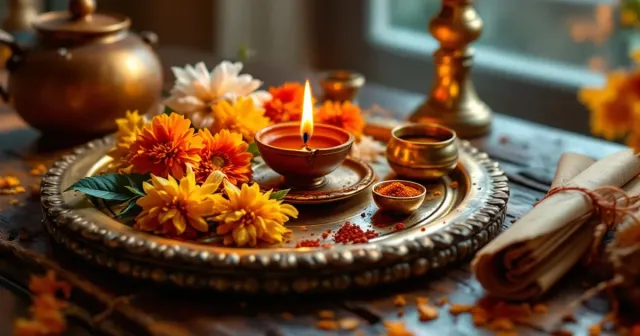
What to keep ready: a copper lota of water with a pinch of red sandal or kumkum, red flowers and a few grains of rice in it; black or white sesame (til); jaggery; a ghee lamp and incense; a picture of Surya or simply an open sky to the east; khichdi or pongal for naivedyam; and the items you will give away.
- Bathe before sunrise or in the maha punya kaal. A dip in the Ganga, Yamuna, Godavari, Kaveri or the sea is traditional. At home, add a few sesame seeds or a little Ganga jal to your bath water.
- Offer arghya to the Sun. Face the rising Sun and pour the water from the lota in a slow stream while chanting “Om Suryaya Namah” or “Om Ghrinih Suryaya Namah” 12 times. Many also recite the Gayatri mantra; see our Gayatri mantra meaning.
- Light the lamp before your home shrine and offer flowers, til and jaggery to Surya and your family deity. Many also worship Vishnu on this day.
- Offer naivedyam: khichdi of new rice and dal in the north, ven pongal or sakkarai pongal in Tamil Nadu, ellu-bella in Karnataka, tilgul laddoos in Maharashtra.
- Give daan (see below) within the punya kaal, then eat with the family.
What to donate on Makar Sankranti
Daan is the heart of the day. The usual gifts are:
- Til (sesame) and gud (jaggery), alone or as laddoos
- Khichdi: uncooked rice and urad dal, often with salt and ghee, which is why Uttar Pradesh and Bihar call the festival Khichdi
- Warm blankets and clothes for people in need, since it is the coldest part of the year
- Ghee, grains and fruit to temples and to those who ask
- Food for cows and birds
Fasting on Makar Sankranti
There is no strict fast laid down for Makar Sankranti. The common practice is to take no food until you have bathed, offered arghya to the Sun and given daan, and then break the fast with khichdi or til sweets. Some devotees keep a fast for the whole day of the punya kaal and eat once in the evening. Rice, dal, sesame and jaggery are welcome; most families avoid non-vegetarian food and alcohol on the day.
How each region keeps Sankranti
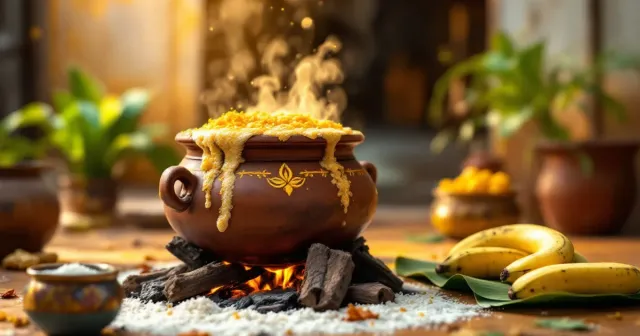
- Tamil Nadu: Thai Pongal. Bhogi clears out the old, Thai Pongal sees new rice boiled with milk and jaggery in a new pot until it spills over to cries of “Pongalo Pongal”, Mattu Pongal honours the cattle and Kaanum Pongal is for visiting family.
- Andhra Pradesh and Telangana: Sankranti. The biggest festival of the Telugu year, with Bhogi fires, rangoli (muggulu), Haridasu singers, gangireddu (decorated bulls) and Kanuma the day after.
- Karnataka: Sankranti. Girls and women visit homes to exchange ellu-bella, a mix of sesame, jaggery, coconut, peanuts and fried gram, with sugarcane.
- Gujarat: Uttarayan. The sky fills with kites, and the next day, Vasi Uttarayan, continues the flying.
- Maharashtra. Tilgul is exchanged, and married women hold haldi-kumkum gatherings.
- Punjab: Lohri and Maghi. A bonfire on the eve, with offerings of til, peanuts and popcorn; Maghi the next day.
- Assam: Magh Bihu, with community feasts after the harvest.
- Uttar Pradesh and Bihar: Khichdi, with dips at Prayagraj and Varanasi and gifts of khichdi and til.
- Kerala: pilgrims gather at Sabarimala for the Makaravilakku.
How Deva AI fits into Makar Sankranti
Deva AI is a free Android app that lets you talk to Hindu gods like Krishna, Shiva, Ganesha and Hanuman through AI conversations, in English, Hindi, Telugu, Tamil, Kannada and Malayalam. If you are far from a river or temple this Sankranti, you can light a lamp and offer flowers in the app’s virtual pooja after your arghya. The japa counter keeps count of your Surya mantra or Gayatri japa, and you can talk to Vishnu or Krishna, by text or voice, about the meaning of Uttarayana in the Gita. To learn more, read what Deva AI is.
For every festival and vrat of the coming year, from Makar Sankranti to Diwali, see our Hindu festival calendar 2027.
Frequently asked questions
Is Makar Sankranti 2027 on 14 or 15 January?
In India it is on Friday, 15 January 2027. The Sun enters Capricorn at 9:14 PM IST on 14 January, after sunset, and by the panchang rule the punya kaal then falls on the next morning, so the bath, puja and daan are done on 15 January.
What is the Makar Sankranti 2027 punya kaal time?
In New Delhi the punya kaal is from 7:15 AM to 5:46 PM on 15 January 2027, and the maha punya kaal, the most auspicious part, is from 7:15 AM to 9:00 AM. Other cities start at their own sunrise; see the table in this guide.
When is Makar Sankranti 2027 in the USA, UK and Canada?
In the USA, Canada and the UK it falls on Thursday, 14 January 2027, because the Sun enters Capricorn during the day there: 10:44 AM in New York and Toronto, 7:44 AM in Los Angeles and 3:44 PM in London.
When are Pongal and Lohri in 2027?
Thai Pongal is on Friday, 15 January 2027, with Bhogi on 14 January, Mattu Pongal on 16 January and Kaanum Pongal on 17 January. Lohri is kept on the evening before Sankranti; calendars give 13 or 14 January 2027, so follow your local gurdwara or community.
Should we fast on Makar Sankranti?
A full fast is not required. Many devotees eat nothing until they have bathed, offered water to the Sun and given daan, then eat khichdi, til-gud sweets or pongal. Follow your family custom.
How can Deva AI help on Makar Sankranti?
In Deva AI you can offer a lamp and flowers in the virtual pooja, count your Surya mantra japa with the japa counter, and talk to Vishnu or Krishna by text or voice about the meaning of the day.