Margazhi 2026 Start Date (16 Dec): Dhanu Sankranti, Dhanurmasam
Quick answer
Margazhi 2026 starts on Wednesday, 16 December, the day of Dhanu Sankranti: Drik Panchang gives the Sun's entry into Dhanu (Sagittarius) at 10:29 AM IST, with the punya kaal from 10:29 AM to about 4 PM. Margazhi, called Dhanurmasam in Telugu and Kannada, runs to Bhogi on Thursday, 14 January 2027; Thai and Pongal begin on 15 January. It is the month of dawn worship of Vishnu and of Andal's Thiruppavai.
When does Margazhi 2026 start? On Wednesday, 16 December 2026, the day of Dhanu Sankranti, when the Sun enters Dhanu (Sagittarius) at 10:29 AM IST. The month runs to Bhogi on Thursday, 14 January 2027, and the Tamil month of Thai begins with Pongal on 15 January. Abroad, the start can fall a day earlier, so check a city-specific panchang if you live outside India.
Margazhi 2026 dates at a glance
| Detail | 2026-27 |
|---|---|
| Margazhi begins (Dhanu Sankranti) | Wednesday, 16 December 2026 |
| Last day of Margazhi (Bhogi) | Thursday, 14 January 2027 |
| Thai begins (Thai Pongal, Makar Sankranti) | Friday, 15 January 2027 |
| Length | roughly 29 to 30 days |
| Also called | Dhanurmasam (Telugu, Kannada), Dhanu month |
The date is panchang-dependent. Margazhi is a solar month, so it starts at the moment the Sun changes sign. In India that moment falls on 16 December. In some countries it falls on the previous evening local time, which makes 16 December the first full dawn of the month there. In Singapore and Australia the first dawn is generally listed as 17 December. If you live abroad, check a city-specific panchang before you plan the first morning.
Dhanu Sankranti 2026: date and punya kaal
Dhanu Sankranti 2026 is on Wednesday, 16 December, the day the Sun leaves Vrischika (Scorpio) and enters Dhanu (Sagittarius). This is the “December sankranti” people search for, and it is the start of Margazhi and Dhanurmasam. It is not Makar Sankranti: that is the Sun’s entry into Makara a month later, on 15 January 2027 (see Makar Sankranti 2027).
| Dhanu Sankranti 2026 | New Delhi | Chennai |
|---|---|---|
| Sankranti moment (Sun enters Dhanu) | 10:29 AM | 10:29 AM |
| Punya kaal | 10:29 AM to 4:00 PM | 10:29 AM to 4:33 PM |
| Maha punya kaal | 10:29 AM to 12:13 PM | 10:29 AM to 12:23 PM |
Times are from Drik Panchang, checked on 20 November 2026. The sankranti moment is the same across India; the end of the punya kaal follows local sunset. Because the Sun changes sign before sunset, 16 December is also the first day (Margazhi 1) of the Tamil month.
What people do on Dhanu Sankranti: a bath at dawn or in a holy river or temple tank, worship of Surya with water (arghya) and a lamp, and daan (gifts of food, clothes or sesame and jaggery) within the punya kaal. In Odisha the day is known as Dhanu Sankranti or Dhanu Muan Sankranti, after the sweet rice dish (dhanu muan) offered on it. In South India the day mostly matters as the first morning of Margazhi or Dhanurmasam, with kolam, temple visits and the first Thiruppavai verse.
Dhanurmasam 2026-27: start and end dates
In Andhra Pradesh, Telangana and Karnataka the same solar month is called Dhanurmasam (Dhanurmasa), the month the Sun spends in Dhanu. In 2026-27 it runs from Wednesday, 16 December 2026 (Sun enters Dhanu at 10:29 AM IST) to Thursday, 14 January 2027, the day of Bhogi; it ends when the Sun enters Makara at 9:14 PM IST that night, and Makar Sankranti is kept on Friday, 15 January 2027. You will also see Margazhi spelled margali or marghazhi, and “margali masam”.
At Tirumala, the Tirumala Tirupati Devasthanams (TTD) each year replaces the dawn Suprabhatam at the Srivari temple with Andal’s Tiruppavai for the whole of Dhanurmasam, reciting one of its thirty pasurams each day, and resumes Suprabhatam when the month ends. TTD announces the exact days each year on its official news site; check there for the 2026-27 notice.
Key Margazhi 2026 dates
| Day | Date | Read more |
|---|---|---|
| Margazhi begins, Dhanu Sankranti | Wednesday, 16 December 2026 | this page |
| Vaikuntha Ekadashi (Mukkoti Ekadashi) | Sunday, 20 December 2026 | Vaikuntha Ekadashi 2026 |
| Arudra Darshan (Thiruvathirai) | Thursday, 24 December 2026 | Arudra Darshan 2026 |
| Margazhi Amavasai and Hanumath Jayanthi (Tamil) | Thursday, 7 January 2027 | Hanumath Jayanthi 2027 |
| Bhogi, last day of Margazhi | Thursday, 14 January 2027 | Pongal 2027 |
| Thai Pongal, Makar Sankranti | Friday, 15 January 2027 | Pongal 2027 |
Dates are for India and match our posts for each festival, where you will find the tithi and nakshatra timings. For the Tamil-language version of this guide, see மார்கழி 2026 எப்போது?.
What is Margazhi and why is it special?
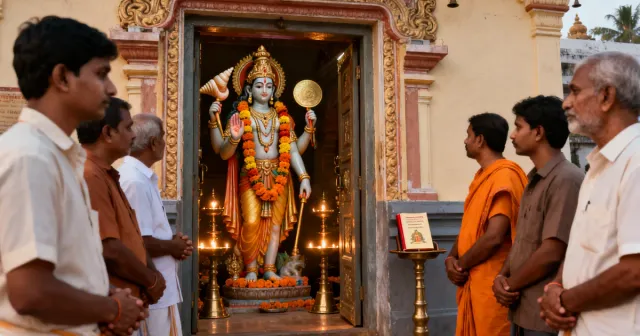
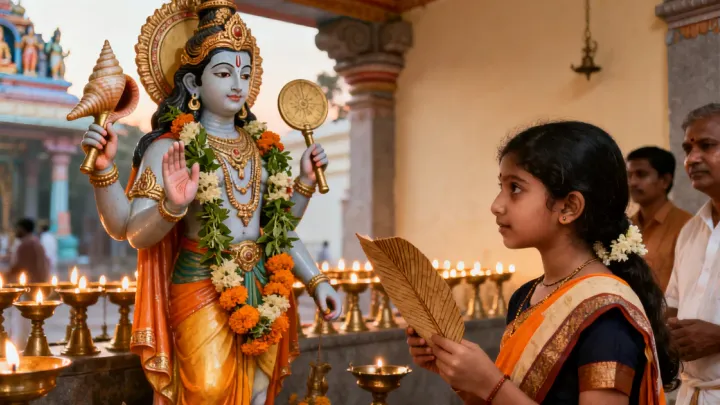
Margazhi is the month of the Tamil calendar when the Sun moves through Sagittarius. Tradition treats it as a month set apart for devotion: people wake before dawn, bathe, draw kolam at the doorstep, light lamps and go to the temple for early worship. In Telugu and Kannada regions the same period is called Dhanurmasam, and many Vishnu temples hold special dawn pujas throughout.
Many devotees connect the month with a line in the Bhagavad Gita (10.35) in which Krishna describes himself as the best of the months, using the word Margashirsha. Note that the lunar Margashirsha month is not the same as the Tamil solar month of Margazhi, although the two overlap, so treat this link as a traditional association rather than a precise dating.
Margazhi is also the season of the Chennai Margazhi music and dance season, when sabhas hold concerts through the month.
Who was Andal and what is Thiruppavai?
Andal (Goda Devi, Kodai) is the only woman among the twelve Alvars, the Tamil poet-saints of Vishnu devotion. Tradition places her in Srivilliputhur. Her Thiruppavai is a set of 30 verses, and the first begins with the words “Margazhi thingal”, the month of Margazhi.
In the verses, Andal imagines herself as a young cowherd girl of Ayarpadi who wakes her friends before dawn to observe the Pavai vow, a vow to worship Krishna together. Each verse is customarily sung on one day of the month, so the 30 verses fit the 30 days of Margazhi. Shiva temples in Tamil Nadu in the same month traditionally recite the Thiruvempavai of Manikkavacakar instead.
For more on the deity the month is dedicated to, read Vishnu Sahasranamam: Meaning and How to Recite It and The Ten Avatars of Vishnu (Dashavatara).
How to observe Margazhi at home
- Wake before sunrise. Many families aim for the Brahma muhurta, about an hour and a half before sunrise, as far as is practical.
- Bathe and clean the doorstep. Sprinkle water and draw a kolam, traditionally with rice flour.
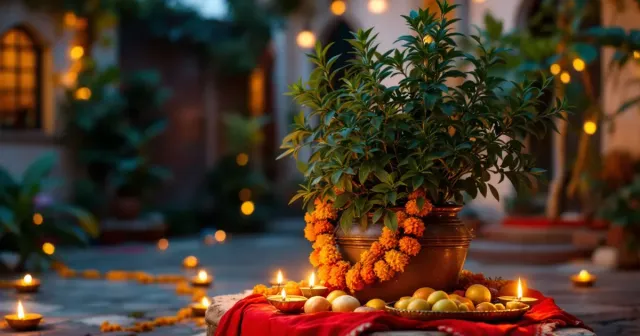
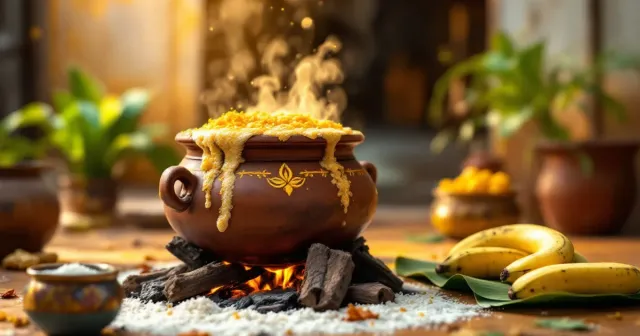
- Light a lamp before the picture or murti of Vishnu or Krishna and offer flowers, tulsi and a simple naivedyam. Many families offer ven pongal or sakkarai pongal in this month.
- Sing or recite Thiruppavai, one verse a day, or listen to a recitation.
- Chant “Om Namo Narayanaya” or “Hare Krishna” for a few minutes, and sit quietly.
- Visit a temple for the dawn puja when you can.
None of this is mandatory. Start with what suits your household, even a single verse and a lamp.
Are weddings avoided in Margazhi?
In many families, particularly in Tamil Nadu and parts of South India, weddings and housewarmings are traditionally not held in Margazhi so that the month stays focused on worship. This is a family and regional custom. Ask your elders or priest about your own tradition.
Keep Margazhi with Deva AI
Deva AI is a free Android app that lets you talk to Hindu gods like Krishna, Shiva, Ganesha and Hanuman through AI conversations, in English, Hindi, Telugu, Tamil, Kannada and Malayalam. Vishnu and Krishna are two of its ten deities, so you can ask them what a verse of Thiruppavai means, light a diya in the virtual pooja, count your mantra with the japa counter and keep a daily streak through the thirty days. Deva AI is a companion inspired by scripture and tradition, not God speaking, and it complements your temple visits and family customs. See the What is Deva AI page for more.
Frequently asked questions
When does Margazhi 2026 start?
Margazhi 2026 starts on Wednesday, 16 December, the day of Dhanu Sankranti. Because the Sun's entry into Sagittarius happens at a particular moment, some calendars abroad, for example in the USA, mark it on the evening of 15 December and the first dawn on 16 December. Check your local panchang.
When is Dhanu Sankranti 2026?
Dhanu Sankranti 2026 is on Wednesday, 16 December. Drik Panchang gives the moment the Sun enters Dhanu as 10:29 AM IST, the punya kaal from 10:29 AM to 4:00 PM in New Delhi (to 4:33 PM in Chennai) and the maha punya kaal from 10:29 AM to about 12:15 PM. This is the December sankranti, different from Makar Sankranti in January.
When does Margazhi end?
The last day of Margazhi is Thursday, 14 January 2027, the day of Bhogi. The Sun enters Makara (Capricorn) at 9:14 PM IST that night, so the Tamil month of Thai, Thai Pongal and Makar Sankranti fall on Friday, 15 January 2027.
When does Dhanurmasam 2026 end?
Dhanurmasam 2026-27 runs from 16 December 2026 to 14 January 2027 and ends when the Sun enters Makara at 9:14 PM IST on 14 January; Makar Sankranti is kept the next day, Friday, 15 January 2027.
What is Margazhi, and what is Dhanurmasam?
Margazhi is the Tamil solar month in which the Sun is in Sagittarius, roughly mid-December to mid-January. The same period is called Dhanurmasam in Telugu and Kannada traditions. It is a month for early-morning worship, especially of Vishnu.
What is Thiruppavai?
Thiruppavai is a set of 30 Tamil verses composed by Andal (Goda Devi), one of the Alvars. It is traditionally sung one verse a day through Margazhi, and it is addressed to Vishnu as Krishna.
Why do people wake up early in Margazhi?
Tradition holds that the pre-dawn hours are especially good for prayer and meditation, and Margazhi is the month devoted to making the most of them. Families draw kolam, visit temples and sing Thiruppavai before sunrise.
Can I use Deva AI during Margazhi?
Yes. In Deva AI you can talk to Vishnu or Krishna about the meaning of Margazhi, light a diya in the virtual pooja, count your japa and keep a daily streak. Deva AI is a free Android app.