Vivah Panchami (Ram Vivah) 2026: Date 14 Dec, Muhurat, Sita Ram Story
Quick answer
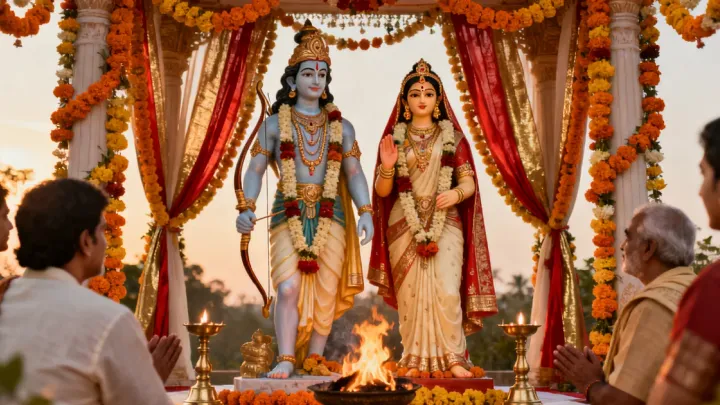
Vivah Panchami, also called Ram Vivah or Sita Ram Vivah, falls on Monday, 14 December 2026, on Margashirsha Shukla Panchami. Drik Panchang for New Delhi gives the Panchami tithi from 4:47 PM on 13 December to 7:15 PM on 14 December IST. It celebrates the wedding of Sri Ram and Sita, kept most grandly at Janakpur and Ayodhya. Some USA calendars list 13 December.
Every year in the month of Margashirsha, devotees celebrate the day Sri Ram and Sita were married. When is Ram Vivah 2026? Vivah Panchami, also called Ram Vivah or Sita Ram Vivah, falls on Monday, 14 December 2026. The Panchami tithi runs from 4:47 PM on 13 December to 7:15 PM on 14 December IST, so the festival is kept on the 14th. A few calendars, especially in the USA, list 13 December instead, because the tithi begins there on that day.
Vivah Panchami 2026 date
| Detail | 2026 |
|---|---|
| Festival | Vivah Panchami (Ram Vivah, Sita Ram Vivah) |
| Date | Monday, 14 December (some USA calendars: 13 December) |
| Tithi | Margashirsha Shukla Panchami |
| Panchami tithi begins | 4:47 PM, Sunday 13 December |
| Panchami tithi ends | 7:15 PM, Monday 14 December |
| Sunrise (New Delhi) | 7:06 AM |
| Abhijit muhurat | 11:55 AM to 12:36 PM |
| Rahu Kalam (avoid for puja) | 8:23 AM to 9:41 AM |
| Marks | The wedding of Sri Ram and Sita |
The tithi times are from Drik Panchang for New Delhi, checked on 20 November 2026; the tithi times are the same across India, while sunrise, Abhijit and Rahu Kalam shift by a few minutes from city to city. In the USA the Panchami begins on the morning of 13 December local time, so some American calendars keep the day on Sunday, 13 December. Your local temple or panchang is the authority for puja timings.
What is Vivah Panchami?
Vivah Panchami celebrates the marriage of Sri Ram, the seventh avatar of Vishnu, and Sita, daughter of King Janaka of Mithila. It is observed on the fifth day of the bright fortnight (Shukla Paksha) of Margashirsha. The great centres of the festival are Janakpur in Nepal, traditionally identified as Sita’s home town, and Ayodhya, where Ram’s family ruled. Temples there stage the wedding as a procession and ceremony, and many Ram temples across India do the same.
When did Ram and Sita marry?
By tradition, Sri Ram and Sita were married on Margashirsha Shukla Panchami, the fifth day of the bright half of Margashirsha, and that is why Vivah Panchami is kept on this tithi every year. The wedding itself is told in the Bala Kanda of the Valmiki Ramayana and in the Bal Kand of Tulsidas’s Ramcharitmanas; the festival’s date comes from the tradition of keeping the day by the lunar calendar. No date in years, such as a “BC” year, can be given as fact: estimates you may see online are speculation, not something the texts state. What devotees mark is the tithi, which falls in November or December each year.
What is the story of the Rama-Sita wedding?
According to the Valmiki Ramayana’s Bala Kanda, the sage Vishwamitra took the young princes Ram and Lakshmana to Mithila, where King Janaka had set a condition for his daughter Sita’s hand: whoever could lift and string the great bow of Shiva would marry her. Many kings had tried and failed.
Ram lifted the bow and, as he drew it, it broke with a thunderous sound. Janaka was overjoyed, and word was sent to King Dasharatha in Ayodhya. The wedding was celebrated with great splendour. In the tradition, Ram’s three brothers were married at the same time: Lakshmana to Urmila, Bharata to Mandavi and Shatrughna to Shrutakirti.
Devotees see the wedding not only as a royal event but as the union of two ideals, Ram’s dharma and Sita’s steadfastness, which is why the couple is held up as a model of a marriage built on respect and shared duty. For more on his character, see Sri Ram: 7 Lessons From the Ramayana.
Why is Vivah Panchami important?
- A model marriage. Many couples pray to Sita and Ram for harmony and mutual respect.
- A day to hear the Ramayana. Reciting or listening to the wedding episode is considered meritorious.
- A regional note. In some places, particularly parts of Mithila, weddings are traditionally not held on this day, because Sita’s married life brought her many trials. Elsewhere it is considered auspicious. Follow your family custom.
Vivah Panchami 2026 at Janakpur and Ayodhya
Janakpur (Janakpurdham), Nepal, traditionally identified as Sita’s home town, holds the largest celebration, a festival of several days that ends with a re-enactment of the wedding. News reports of recent years describe the same order: the procession of Ram from the city’s Ram Mandir meets the procession of Sita from Janaki Mandir, garlands are exchanged at the Rangabhumi ground, and the images of Ram and Sita are carried on palanquins to Janaki Mandir, where a full Vedic wedding is performed between them. The mahants of the two temples take the roles of King Janaka and King Dasharatha. Pilgrims and sadhus from Ayodhya often travel to Janakpur as the barat (wedding party), and the festival closes with the Ram Kalewa ritual, marking the start of the couple’s married life.
Ayodhya celebrates the same day in its temples, especially at Kanak Bhawan, the temple traditionally said to have been Sita’s palace, and in Ram temples across the city, where the wedding of Ram and Sita is celebrated with bhajans, readings of the wedding episode and a symbolic ceremony. Schedules are announced by each temple close to the date, so check locally before you travel.
How to do Vivah Panchami puja at home
- Clean the shrine and place a picture or murti of Sita and Ram.
- Bathe and wear fresh clothes, and take a simple sankalpam to worship them.
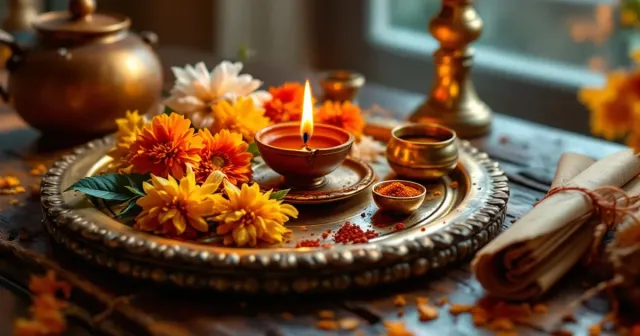
- Light a lamp and offer flowers, fruit and a simple sweet.
- Read the wedding episode from the Ramcharitmanas or the Ramayana, or listen to a recitation.
- Chant “Shri Ram Jai Ram Jai Jai Ram” or “Om Sri Sita Ramabhyam Namah”. You can count 108 repetitions; see Ram Naam Japa for how.
- Offer aarti and share the prasad with your family.
Many families keep a light fast until the evening puja; this is optional and varies by tradition. Since Rahu Kalam in New Delhi is 8:23 to 9:41 AM, many do the morning puja after it, or in the Abhijit muhurat around noon.
Puja samagri
- A picture or murti of Sita and Ram, a clean cloth (red or yellow) for the altar
- A ghee lamp, incense, camphor for aarti
- Flowers and garlands (two garlands, one each for Ram and Sita, recall the jaimala)
- Kumkum, haldi, chandan, akshata (unbroken rice), tulsi leaves
- Fruit, a simple sweet or kheer as naivedya, betel leaves and supari
- For Sita: bangles, sindoor, a red chunri, as many families offer suhag items
- The Ramcharitmanas or a Ramayana for the reading
What to recite
- The wedding episode of the Bal Kand of the Ramcharitmanas (the breaking of Shiva’s bow, the jaimala and the wedding), or the corresponding chapters of the Bala Kanda of the Valmiki Ramayana.
- The mantra “Shri Ram Jai Ram Jai Jai Ram”, or the name “Sita Ram” as japa.
- In Mithila homes, women sing traditional wedding songs for Ram and Sita.
Why some families avoid weddings on Vivah Panchami
Although the day celebrates a wedding, many families, especially in Mithila and Nepal, do not hold weddings on it. The reason given is that Sita’s married life brought her exile, separation and hardship, and parents do not wish that fate for a daughter. Other communities consider the day auspicious. Follow your family custom and your priest’s advice.
Observe Vivah Panchami with Deva AI
Deva AI is a free Android app that lets you talk to Hindu gods like Krishna, Shiva, Ganesha and Hanuman through AI conversations, in English, Hindi, Telugu, Tamil, Kannada and Malayalam. Sri Ram is one of its ten deities, so you can ask him about the wedding story or what the day means, light a diya in the virtual pooja, and count your Ram naam japa with the japa counter. Deva AI is a companion inspired by scripture and tradition, not God speaking, and it complements a temple visit or your family’s customs. Read more on the What is Deva AI page.
If you are following this season’s festivals, see the Hindu festival calendar, and also Tulsi Vivah 2026 and Ramayana for beginners. This guide is also available in Hindi: विवाह पंचमी 2026.
Frequently asked questions
What is Ram Vivah 2026 date?
Ram Vivah, observed as Vivah Panchami, is on Monday, 14 December 2026. Drik Panchang for New Delhi gives the Margashirsha Shukla Panchami tithi from 4:47 PM on 13 December to 7:15 PM on 14 December IST, so the festival is kept on the 14th, the day the tithi is current at sunrise.
What date did Ram and Sita get married?
Tradition holds that Sri Ram and Sita were married on Margashirsha Shukla Panchami, the fifth day of the bright fortnight of Margashirsha, which is why Vivah Panchami is kept on that tithi. No calendar date in years can be given as historical fact; the day is remembered by the lunar calendar.
When is Vivah Panchami in 2026?
Vivah Panchami 2026 is on Monday, 14 December. The Panchami tithi begins at 4:47 PM IST on 13 December, so some calendars, especially in the USA, show 13 December. Check your local panchang if you live abroad.
What is Vivah Panchami?
Vivah Panchami is the festival that marks the wedding of Sri Ram and Sita. It is observed on the Panchami tithi of the bright fortnight in the month of Margashirsha (November-December) and is celebrated most grandly at Janakpur in Nepal and in Ayodhya.
How is Vivah Panchami celebrated?
Temples hold a symbolic wedding of Ram and Sita with processions, bhajans and recitation of the Ramcharitmanas or Ramayana. At home, devotees clean the shrine, light a lamp, offer flowers and read the wedding episode.
Is Vivah Panchami a good day for weddings?
Practice differs by region. Some communities, notably in parts of Mithila, avoid holding weddings on this day, because Sita's later life was full of hardship, while others consider it auspicious. Follow your family tradition and the advice of your priest.
Can I observe Vivah Panchami with Deva AI?
Yes. In Deva AI you can talk to Sri Ram about the wedding story and its meaning, light a diya in the virtual pooja, and count your Ram naam japa with the japa counter. Deva AI is a free Android app.