Saphala Ekadashi 2027: Date (3 Jan), Parana Time, Vrat Katha
Quick answer
Saphala Ekadashi 2027 is on Sunday, 3 January. Drik Panchang gives the Ekadashi tithi from 2:24 PM IST on 2 January to 4:08 PM on 3 January, and parana on Monday, 4 January between about 6:32 and 9:19 AM depending on the city. The same Ekadashi comes again on Thursday, 23 December 2027.
Saphala means “fruitful”, and this is the Ekadashi that tradition says makes every effort bear fruit. Saphala Ekadashi 2027 is on Sunday, 3 January. According to Drik Panchang, the Ekadashi tithi begins at 2:24 PM IST on Saturday, 2 January and ends at 4:08 PM on Sunday, 3 January, and the fast is broken on the morning of Monday, 4 January. It is the first Ekadashi of 2027, and because the lunar calendar runs short of the solar year, the same Ekadashi returns on Thursday, 23 December 2027.
Saphala Ekadashi 2027 date and time
| Detail | January 2027 | December 2027 |
|---|---|---|
| Fasting day | Sunday, 3 January | Thursday, 23 December |
| Tithi | Pausha Krishna Ekadashi (Purnimanta) | Pausha Krishna Ekadashi (Purnimanta) |
| Ekadashi begins | 2:24 PM IST, Saturday 2 January | 11:40 PM IST, Wednesday 22 December |
| Ekadashi ends | 4:08 PM IST, Sunday 3 January | 11:11 PM IST, Thursday 23 December |
| Parana day | Monday, 4 January | Friday, 24 December |
| Dwadashi ends | 6:15 PM IST, 4 January | 11:08 PM IST, 24 December |
All times are from Drik Panchang for New Delhi. The tithi times are the same moment everywhere in India; only the parana window changes with local sunrise.
In January the Ekadashi tithi starts on Saturday afternoon, so Saturday has Dashami at sunrise and Sunday, 3 January is the only day with Ekadashi at sunrise. Smarta and Vaishnava calendars agree in India.
Parana time for Saphala Ekadashi by city
Parana means breaking the fast. It is done on Dwadashi morning, within the window below, after a short prayer to Vishnu.
| City | Parana, 4 January 2027 | Parana, 24 December 2027 |
|---|---|---|
| New Delhi | 7:15 AM to 9:19 AM | 7:11 AM to 9:15 AM |
| Chennai | 6:32 AM to 8:49 AM | 6:28 AM to 8:44 AM |
| Hyderabad | 6:47 AM to 9:01 AM | 6:43 AM to 8:56 AM |
| Bengaluru | 6:43 AM to 8:59 AM | 6:38 AM to 8:54 AM |
Saphala Ekadashi 2027 outside India
The tithi begins at a different local time in each country, so the fasting day can change. These dates and parana windows are from Drik Panchang for each city, in local time.
| Country (city) | January fast | January parana | December fast | December parana |
|---|---|---|---|---|
| USA (New York) | Sat 2 Jan | 3 Jan, 12:57 to 2:49 PM | Thu 23 Dec | 24 Dec, 7:18 to 9:09 AM |
| USA (Los Angeles) | Sat 2 Jan | 3 Jan, 12:57 to 2:57 PM | Thu 23 Dec | 24 Dec, 6:56 to 8:54 AM |
| Canada (Toronto) | Sat 2 Jan | 3 Jan, 1:16 to 3:05 PM | Thu 23 Dec | 24 Dec, 7:49 to 9:36 AM |
| UK (London) | Sun 3 Jan | 4 Jan, 8:06 to 9:42 AM | Thu 23 Dec | 24 Dec, 8:05 to 9:39 AM |
| UAE (Dubai) | Sun 3 Jan | 4 Jan, 7:05 to 9:13 AM | Thu 23 Dec | 24 Dec, 7:01 to 9:08 AM |
| Singapore | Sun 3 Jan | 4 Jan, 7:08 to 9:32 AM | Thu 23 Dec | 24 Dec, 7:40 to 9:27 AM |
| Malaysia (Kuala Lumpur) | Sun 3 Jan | 4 Jan, 7:20 to 9:43 AM | Thu 23 Dec | 24 Dec, 7:40 to 9:38 AM |
| Australia (Sydney) | Sun 3 Jan | 4 Jan, 5:50 to 8:42 AM | Thu 23 Dec | 24 Dec, 2:21 to 5:14 PM |
In North America the January tithi begins in the small hours of 2 January, so the fast moves to Saturday there and parana on 3 January waits until Hari Vasara, the first quarter of Dwadashi, is over; that is why the window is in the afternoon. In New York, Drik Panchang also lists a Vaishnava fast on Sunday, 3 January, with parana on 4 January between 7:20 and 7:45 AM. In Sydney in December, it lists the Vaishnava fast on Friday, 24 December, with parana on 25 December between 5:43 and 8:36 AM. If your temple follows ISKCON or another sampradaya calendar, keep its date.
What is Saphala Ekadashi?
Saphala Ekadashi is the Ekadashi of the waning moon in the month of Pausha (Paush) in the North Indian Purnimanta calendar. In the Amanta calendar of Gujarat, Maharashtra, Karnataka, Andhra Pradesh and Telangana the same day is Margashirsha Krishna Ekadashi; the date does not change, only the month name. It is also spelt Safala Ekadashi. For the same vrat in Hindi, with parana times for Lucknow, Varanasi and Patna, see सफला एकादशी 2027.
It comes in the cold weeks of Dhanurmasam, the month Tamil Nadu calls Margazhi, between Vaikunta Ekadasi on 20 December 2026 and Pausha Putrada Ekadashi on 18 January 2027. Vishnu, in the form of Narayana or Achyuta, is worshipped, and fruit offerings have a special place because of the story told below.
Saphala Ekadashi vrat katha: the story of Lumpaka
In the version given by Drik Panchang, Krishna tells this story to Arjuna (other tellings, such as ISKCON’s, have him tell it to Yudhishthira).
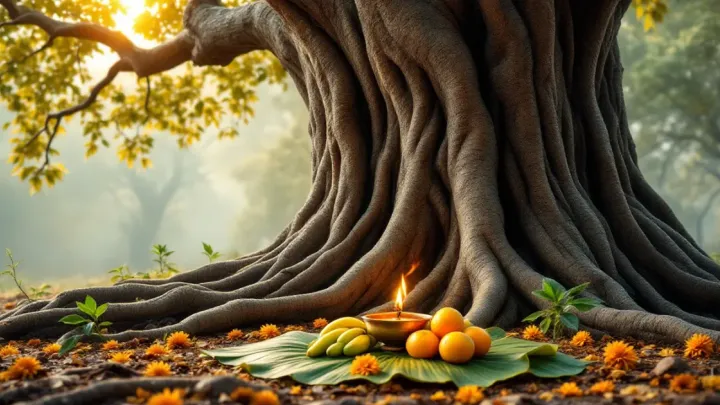
King Mahishmana ruled the city of Champavati and had four sons. The eldest, Lumpaka, was cruel and dissolute. He wasted his father’s wealth and mocked the gods, the Brahmins and the devotees of Vishnu, until the king banished him. Lumpaka went to live in a forest, under an ancient peepal tree (some tellings say a banyan) in a place the people held sacred. By night he crept into the city to steal, and by day he hunted in the forest.
On the Dashami night of the dark fortnight of Pausha, the cold was severe. Lumpaka had no clothes to protect him; he could not sleep, his limbs went stiff and he lost consciousness. He lay senseless until the afternoon sun of Ekadashi warmed him. Too weak to hunt, he gathered fruits that had fallen to the ground and came back to the tree after sunset. He could not bring himself to eat them. Instead he placed them at the foot of the tree and said, in effect, “Lord, I offer these fruits to you; may you be pleased.” Then he wept through the night, unable to sleep.
Without knowing it, he had kept the Ekadashi fast, stayed awake through the night and offered fruits to Vishnu. Vishnu was pleased and forgave his sins. The next morning a celestial chariot appeared and a divine voice told him that, by Narayana’s grace, his sins were destroyed and he could return to his kingdom. Lumpaka went home a changed man. His father gave him the throne and retired to the forest, and Lumpaka ruled righteously with his family devoted to Vishnu. In old age he handed the kingdom to his son and went to the forest himself.
The story ends, as most Ekadashi kathas do, with the merit of the day: Drik Panchang’s telling says that keeping this fast with devotion and a night vigil brings the fruit of long penance, and that even reading or hearing its glory brings the merit of a Rajasuya yajna. The lesson most families take from it is simpler: an offering made with a sincere heart, even an accidental one, is not wasted.
How to observe Saphala Ekadashi: vrat vidhi
- Dashami (2 January): eat one simple, satvik meal before sunset. Avoid onion, garlic, meat and alcohol.
- Ekadashi morning (3 January): bathe early, clean the shrine and take a sankalpa (resolve) before Vishnu: “I will keep the Saphala Ekadashi fast to please Lord Vishnu.”
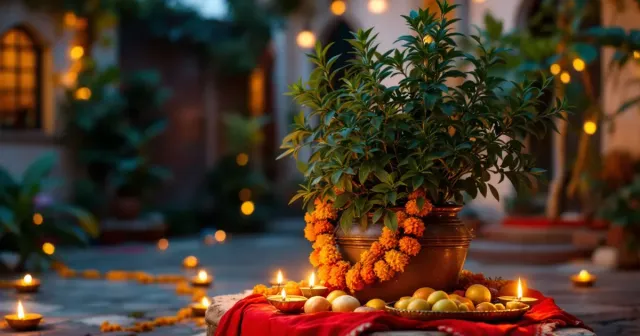
- Puja: place an image of Vishnu or Krishna, light a ghee lamp and incense, and offer tulsi leaves, yellow flowers, sandal paste and seasonal fruit. Fruits such as oranges, bananas, guavas, amla, coconut and pomegranate are traditional on this day, remembering Lumpaka’s offering.
- Chant: “Om Namo Bhagavate Vasudevaya” or “Om Namo Narayanaya” on a mala, or recite the Vishnu Sahasranamam. Read or listen to the vrat katha.
- Evening: light lamps again. Many families light a lamp under a peepal tree or near the tulsi plant.
- Night: stay awake in bhajan, kirtan or reading for as long as you can (jagaran).
- Dwadashi (4 January): offer a little food to Vishnu, give food or warm clothes to someone in need if you can, and break the fast within the parana window for your city.
What to eat and avoid on Saphala Ekadashi
| Usually avoided | Usually allowed (if not fasting fully) |
|---|---|
| Rice, wheat and all grains | Fruit and fruit juice |
| Dal, lentils and beans | Milk, curd, paneer, buttermilk |
| Onion and garlic | Potato, sweet potato, arbi |
| Ordinary table salt (many use sendha namak) | Sabudana, kuttu, singhara and rajgira flour |
| Meat, fish, eggs, alcohol | Nuts, dates, makhana |
Devotees choose how strict to be when they take the sankalpa: some keep a nirjala fast without water, some take only water, some only milk or fruit, and others one phalahar meal. Those who are elderly, unwell, pregnant or on medication should keep a gentle version and ask their doctor. The fast is a devotional discipline, not a test of endurance.
Every Ekadashi around Saphala Ekadashi
| Ekadashi | Date | Notes |
|---|---|---|
| Utpanna Ekadashi | Friday, 4 December 2026 | |
| Mokshada / Vaikunta Ekadasi | Sunday, 20 December 2026 | Also Gita Jayanti |
| Saphala Ekadashi | Sunday, 3 January 2027 | Parana 4 January |
| Pausha Putrada Ekadashi | Monday, 18 January 2027 | Vaishnava fast on 19 January |
| Saphala Ekadashi | Thursday, 23 December 2027 | Parana 24 December |
For every Ekadashi, Pradosham and festival of the year, see the Hindu Festival Calendar 2027.
Keep the Saphala Ekadashi fast with Deva AI
Deva AI is a free Android app that lets you talk to Hindu gods like Krishna, Shiva, Ganesha and Hanuman through AI conversations, in English, Hindi, Telugu, Tamil, Kannada and Malayalam. Vishnu and Krishna are among its ten deities, so on the evening of the fast you can ask Vishnu about the meaning of Lumpaka’s story, count “Om Namo Narayanaya” with the japa counter, or light a diya in the virtual pooja if you are away from home. The Bhagavad Gita reader is there for the night of jagaran. Deva AI is a companion inspired by scripture and tradition, not God speaking, and it sits alongside your own puja and family customs. Read more on the What is Deva AI page.
Frequently asked questions
When is Saphala Ekadashi in 2027?
Saphala Ekadashi falls twice in 2027: on Sunday, 3 January and on Thursday, 23 December. For the January fast, the Ekadashi tithi runs from 2:24 PM IST on 2 January to 4:08 PM on 3 January (Drik Panchang, New Delhi).
What is the parana time for Saphala Ekadashi on 4 January 2027?
Drik Panchang gives parana on Monday, 4 January from 7:15 to 9:19 AM in New Delhi, 6:32 to 8:49 AM in Chennai, 6:47 to 9:01 AM in Hyderabad and 6:43 to 8:59 AM in Bengaluru.
Is Saphala Ekadashi on 2 or 3 January 2027?
In India it is on Sunday, 3 January, the only day with Ekadashi at sunrise. In the USA and Canada the tithi starts early on 2 January local time, so Drik Panchang lists the fast on Saturday, 2 January there; in New York it also lists a Vaishnava fast on 3 January.
What is the story of Saphala Ekadashi?
Krishna tells of Lumpaka, the wicked son of King Mahishmana of Champavati, who was exiled to a forest. One Pausha night he could not eat or sleep for cold and hunger and offered fallen fruits to Vishnu at the foot of a peepal tree, keeping the Ekadashi fast and vigil without knowing it. Vishnu forgave him and he returned to rule righteously.
What can I eat on Saphala Ekadashi?
Those who do not keep a full fast usually avoid rice, wheat, other grains and pulses, and eat fruit, milk, curd, nuts, potatoes, sabudana or kuttu. Follow your family custom, and keep a gentle fast if you are unwell, elderly, pregnant or on medication.
Which month is Saphala Ekadashi in?
It is the Krishna paksha Ekadashi of Pausha in the Purnimanta calendar of North India, and of Margashirsha in the Amanta calendar used in Gujarat, Maharashtra, Karnataka and the Telugu states. The date is the same in both.